
Orangutan Forest Restoration Project: A Report from Groups 3 & 4
The original of this article was written in Japanese and can be found here.
※ This article was originally published in the Japan Malaysia Association (JMA) member bulletin “Malaysia,” Vol. 56 (issued January 10, 2025).
In 2024, the Japan Malaysia Association (JMA) launched the “Orangutan Forest Restoration Project” in collaboration with the Nippon Foundation Volunteer Centre. The project dispatches university students from across Japan to Sarawak, Malaysia, to carry out tree-planting activities aimed at restoring tropical rainforests. Over ten years, approximately fifteen student volunteers will be sent four times a year to work alongside indigenous villagers in the planting areas, with a goal of planting 100,000 trees in total. Student recruitment is handled through “Bokatsu!” (https://vokatsu.jp/), one of Japan’s largest volunteer platforms operated by the Nippon Foundation Volunteer Centre, which also manages all student selection. The project’s third group was dispatched July 29 – August 9 and the fourth group August 26 – September 7. JMA Deputy Director Yuma Kosuga, who accompanied the first and second groups, joined both groups again and submits the following report.
Introduction
This is Kosuga from the Japan Malaysia Association. I accompanied both the third and fourth groups on the Orangutan Forest Restoration Project, run in partnership with the Nippon Foundation Volunteer Centre. While the overall structure of both trips — centered on tree-planting — followed the same framework as the first and second groups, several new program elements were introduced this time, and it is those additions that I would like to focus on here.
The new activities added for the third and fourth groups were: visits to local elementary schools, a pepper-harvesting experience, an exchange with students from Universiti Malaysia Sarawak (UNIMAS), undergrowth-clearing work, and a visit to a Japanese company operating in the area. In addition, during the fourth group’s stay, Nippon Foundation Chairman Yohei Sasakawa visited the site and spent time with the students — an occasion worth reporting on as well.
For a detailed account of the twelve-day schedule centered on tree-planting, please refer to issue 54 of the JMA member bulletin.
Visits to Local Elementary Schools
For the third and fourth groups, we added elementary school visits as a new program element. The schools we visited were both located near the planting areas: SK Trian for the third group and SK Krayt for the fourth group. “SK” stands for Sekolah Kebangsaan — national schools that teach in Malay, the national language.
The program was designed to foster international exchange between Japanese university students and local elementary school children. The student volunteers were asked to plan their activities — deciding what they would do with the children at school — before departing Japan.
The students split into groups assigned to specific classes (Year 1, Year 3, and Year 5) and had a wonderful time playing Japanese games with the children: “Daruma-san ga Koronda” (a version of Red Light, Green Light), Musical Chairs, origami, and more. None of these activities were suggested by the program coordinators; the students took full ownership of deciding what to do and how to make the local children happy, planning everything themselves. I still remember seeing the students gather spontaneously at the hotel the evening before the school visit to run through their plans and finish their preparations.
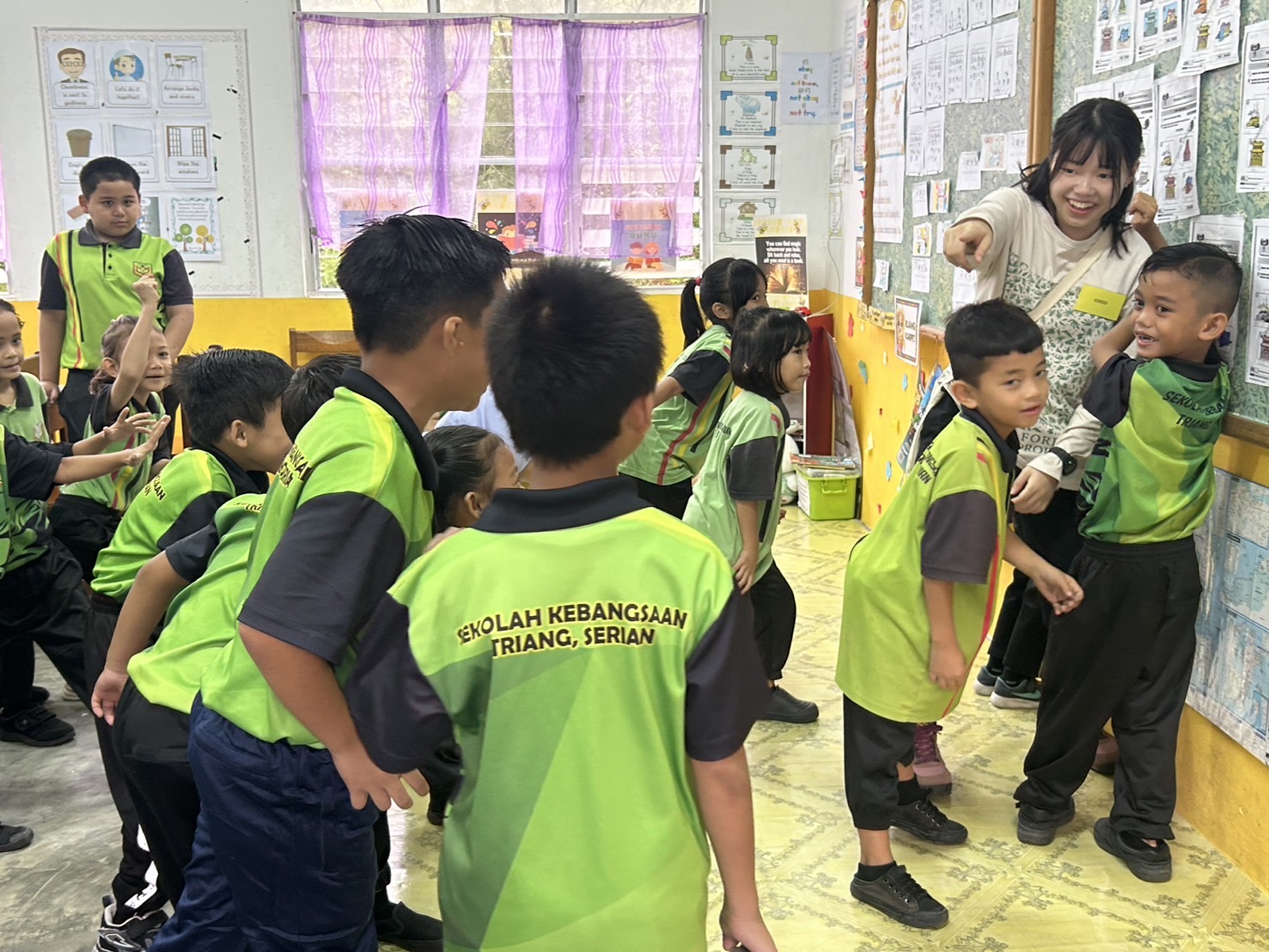
Playing “Daruma-san ga Koronda” (Red Light, Green Light) with local elementary school students
During the third group’s visit, tree-planting also took place on the school grounds. Beyond the Japanese students and local children, the school principal, teachers, and a contingent of border guards all joined in — nearly one hundred people planting trees together in all.
JMA’s tree-planting activities have been incorporated into local schools as part of environmental education, and having Japanese university students and local elementary school children connect through tree-planting felt deeply significant for the development of the next generation.
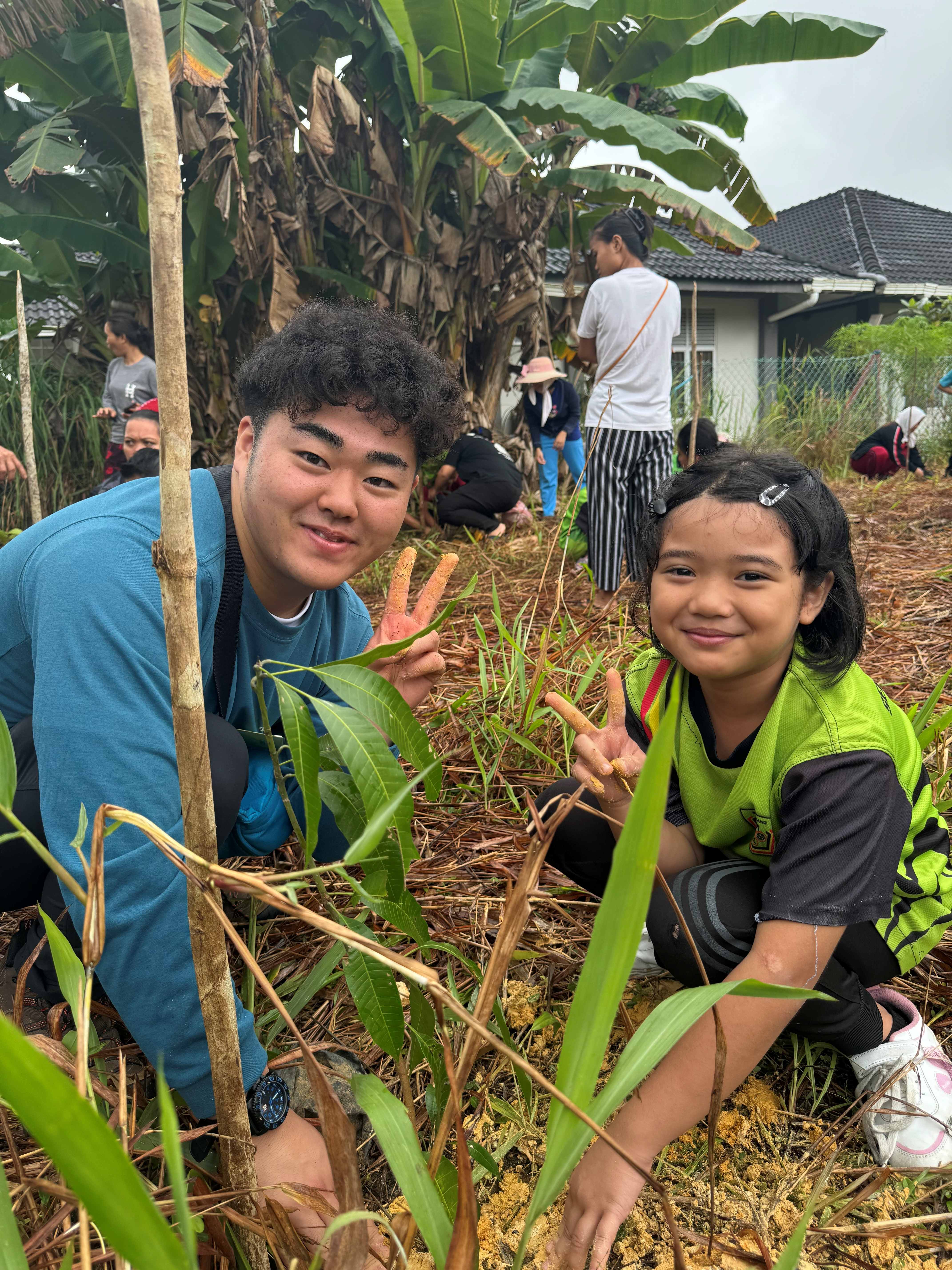
Tree-planting with local elementary school students
Pepper-Harvesting Experience
Sarawak, Malaysia, is renowned as a pepper-producing region. The Bidayuh villagers who partner with our student volunteers — known as “buddies” — grow pepper as one of their income sources. This time, we visited a pepper farm run by the buddies and their relatives for a hands-on harvesting experience.
Pepper is a perennial climbing plant that thrives at higher elevations in humid tropical conditions. The farm is located a short drive from Tong Nibong village (where the buddies live), followed by a brief uphill walk.
The students learned the harvesting technique from the villagers and carefully picked the berries — which grow in grape-like clusters on branches extending from the vines. When a villager invited them to taste a freshly picked peppercorn, the students’ surprised reactions — “It really tastes like pepper!” — were quite memorable. Since much of the pepper available in Japan everyday actually comes from Sarawak, the experience gave students a vivid sense of where familiar things come from.
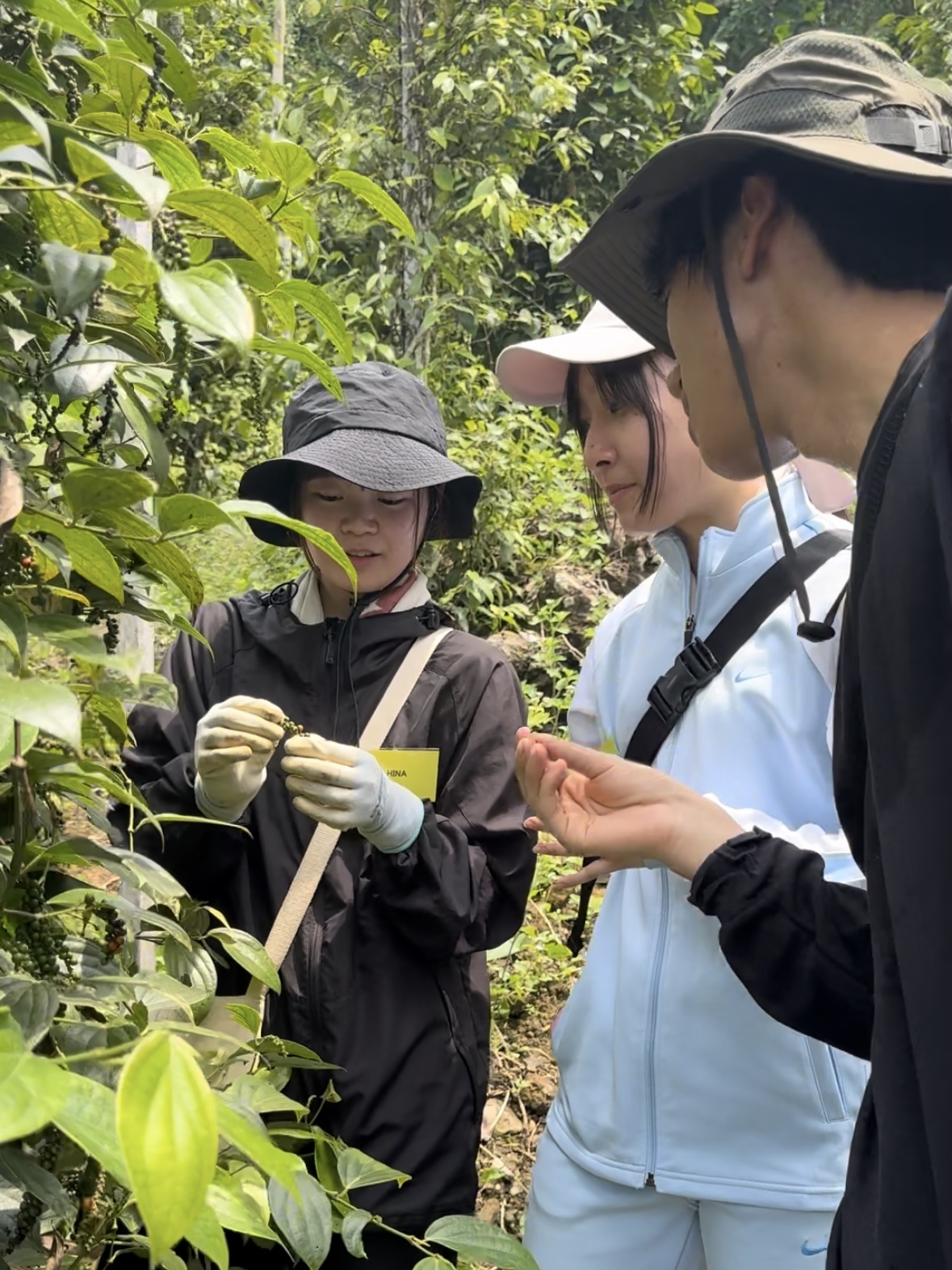
Harvesting pepper
Exchange with Universiti Malaysia Sarawak Students
For this round of activities, four graduate students from seminars led by Dr. Effendi and Dr. Kamil — faculty members at Universiti Malaysia Sarawak (UNIMAS), Sarawak’s first national university — joined the program.
UNIMAS has provided invaluable academic support to our tree-planting activities, and the Japanese students found plenty to talk about with their Malaysian counterparts: research topics, what drew them to their respective fields, and other conversations that only university students tend to have. Since the UNIMAS students were fluent in English, the Japanese students were also actively engaging with them throughout.
The UNIMAS students participated in the overnight stay at the facility set up within Gunung Apeng National Park, the project’s planting site, and joined the group for a “night walk” through the tropical rainforest — a memorable international exchange under the forest canopy.
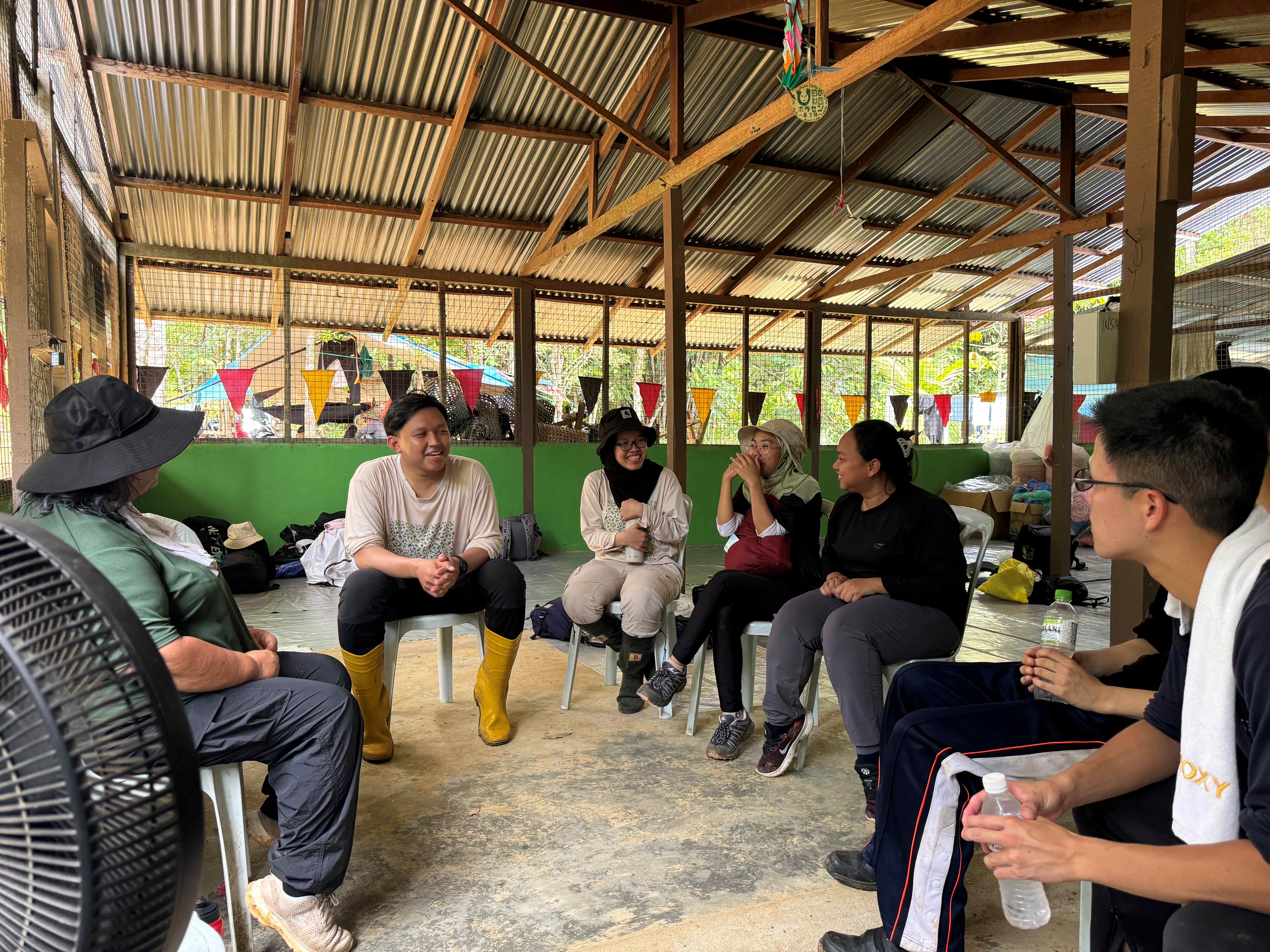
Interacting with UNIMAS students (the four in the center)
Undergrowth Clearing
Maintaining trees after they are planted is just as important as planting them. Whereas the first and second groups carried out marking work on previously planted trees, the third and fourth groups tackled undergrowth clearing.
Undergrowth clearing involves removing weeds that grow up around the planted saplings so that the trees receive enough nutrients to thrive. Vegetation in tropical rainforests is relentless — within a matter of months, weeds can grow so thick that most planted trees will not survive. It is only because the villagers regularly clear the ground using the parang — a traditional machete that is an essential tool of daily life here — that tree-planting can take place at all. The students borrowed parangs from their buddy villagers and, taking great care, set to work clearing the undergrowth. Since similar-looking weeds often grow right next to the planted saplings, the students had to be careful throughout not to cut down the young trees they were trying to protect.
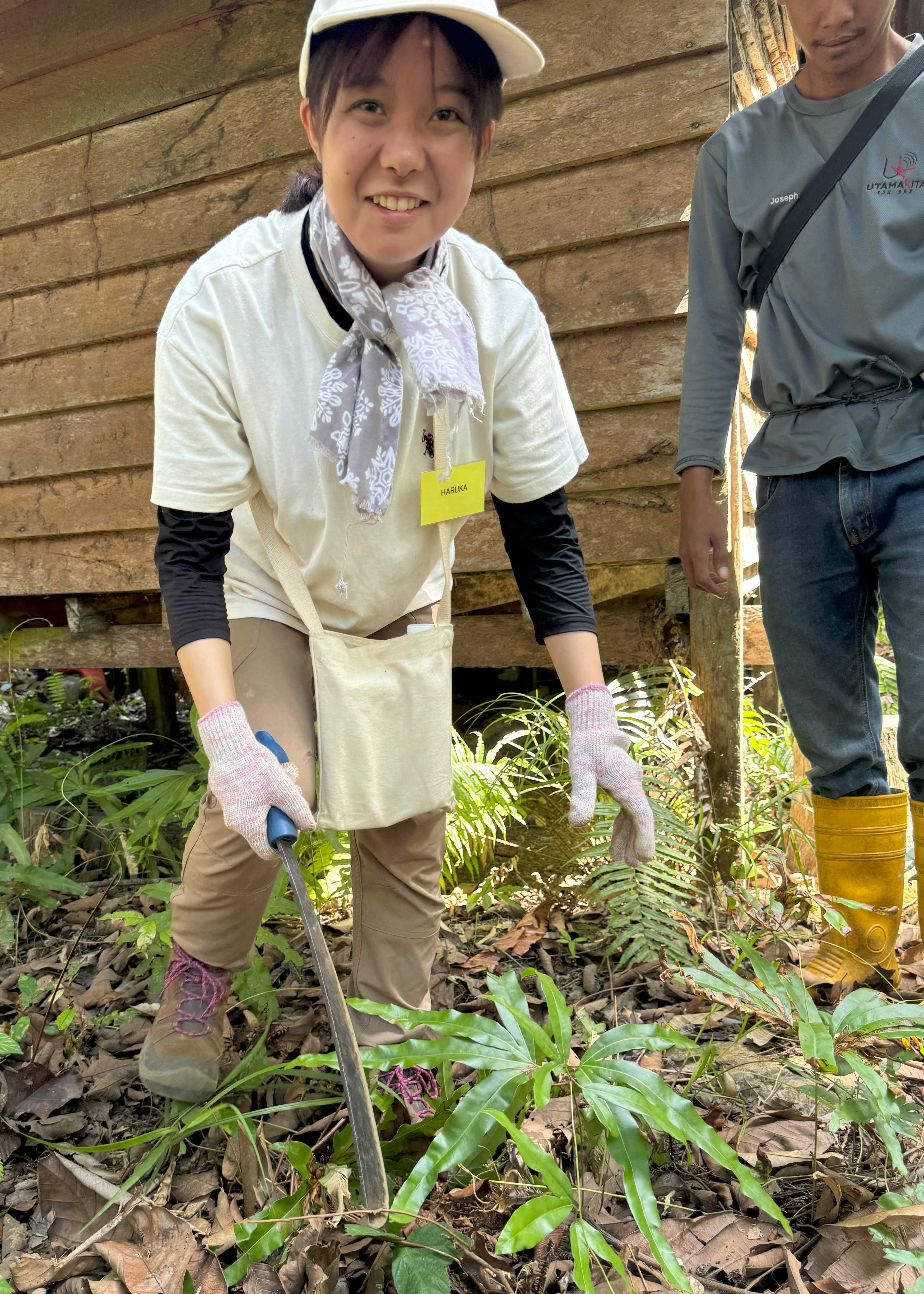
Undergrowth-clearing work
The area cleared by the third group was where the first group had planted, and the area cleared by the fourth group was where the second group had planted. Following this pattern, the fifth and sixth groups are planned to carry out maintenance on the areas planted by the third and fourth groups, creating a cycle of care that connects each cohort of student volunteers.
Visit to a Japanese Company in Sarawak
To give students a window into Japanese business activity in Sarawak, we arranged a factory visit to TAIYO YUDEN (SARAWAK) SDN. BHD. — the local subsidiary of Taiyo Yuden Co., Ltd. — based in Kuching, the state capital. The local subsidiary’s president, Masashi Toyama, also serves as president of the Kuching Japanese Association, and it was through that connection that we were able to arrange the visit.
Taiyo Yuden specializes in precision electronic components, including capacitors made from dielectric ceramics. During the factory tour, company engineers walked the students through the manufacturing process step by step. Afterward, there was an informal conversation session during which the students heard directly from the local Japanese staff about what it is like to work overseas, why Taiyo Yuden established a presence in Kuching in particular, and how the company views Sarawak as a business destination.
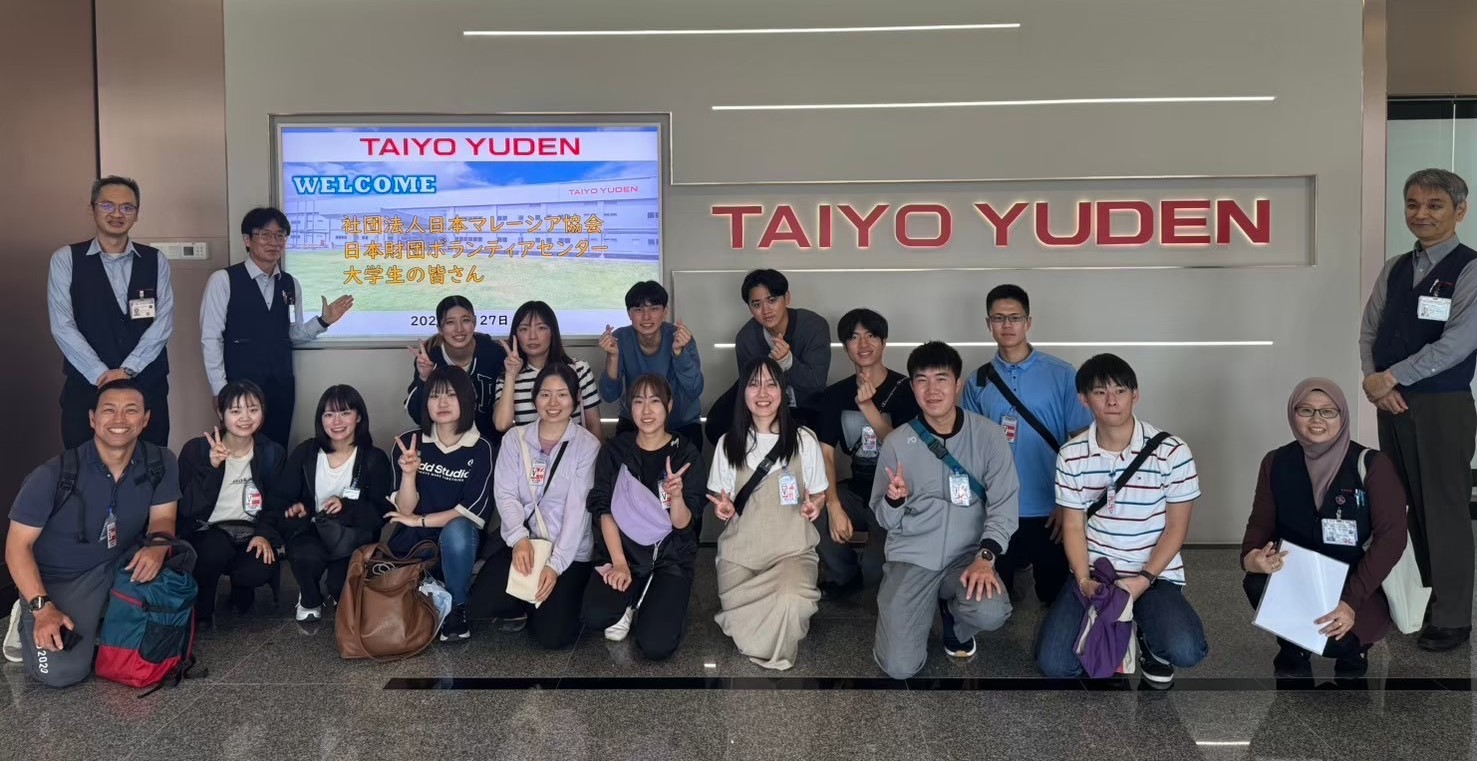
Group photo with Taiyo Yuden Sarawak staff at the factory
Site Inspection by Nippon Foundation Chairman Sasakawa
On September 1, 2024, while the fourth group was in the field, Nippon Foundation Chairman Yohei Sasakawa visited Gunung Apeng National Park to inspect the project firsthand.
Chairman Sasakawa joined the students in planting trees — digging holes, removing seedlings from their pots, and placing them in the ground — with an energy that belied his age. After the planting session, he sat down for lunch with the students and the conversation ranged freely, from the Nippon Foundation’s work to everyday topics.
This is a long-term project, carried out in partnership with the Nippon Foundation Volunteer Centre over ten years. Throughout that time, it will always be necessary to keep exploring new possibilities in order to give student volunteers meaningful experiences and learning opportunities through tree-planting. In that context, having Chairman Sasakawa visit the site in person during the very first year of the project carries real significance.
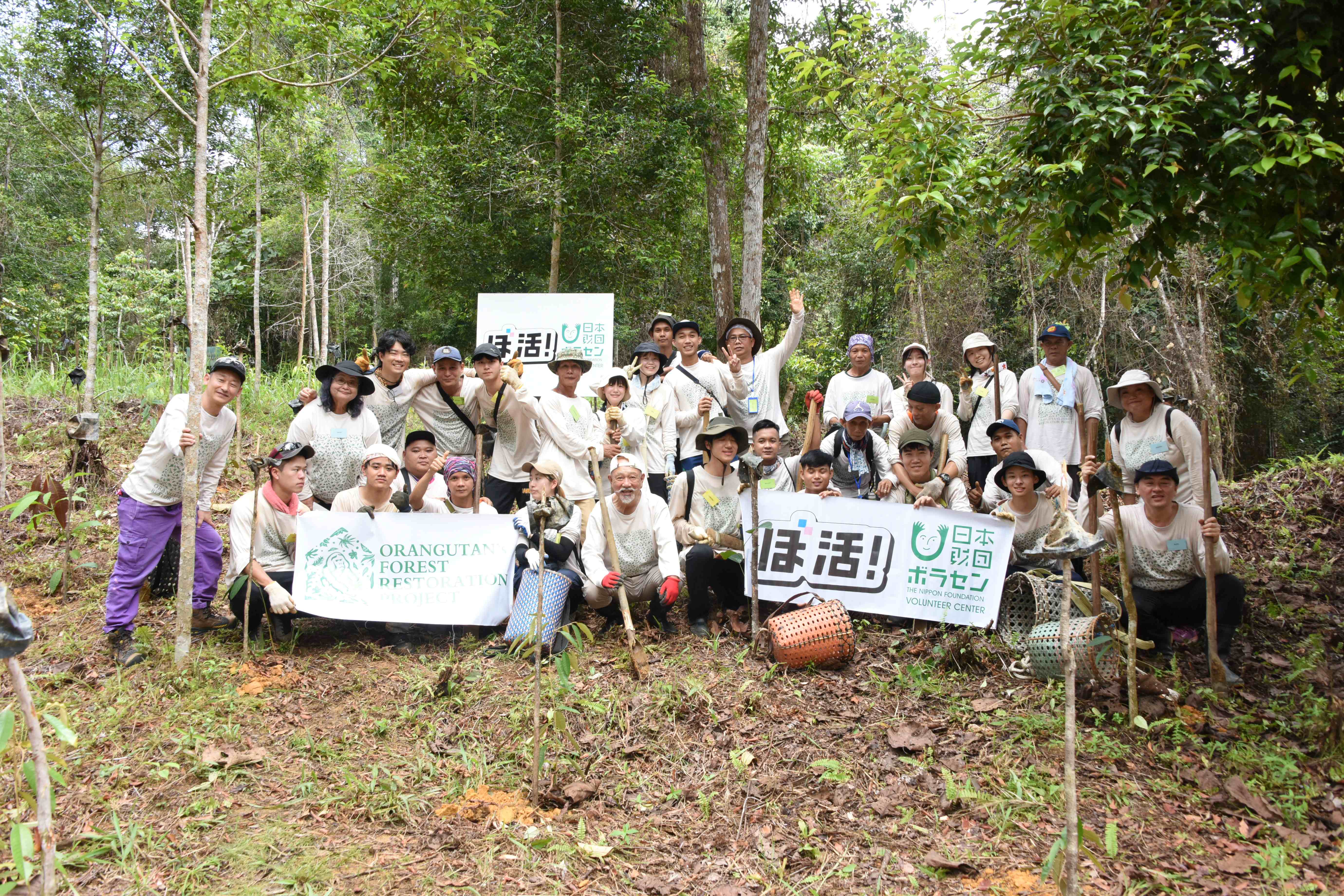
Group photo with Chairman Sasakawa and the fourth group
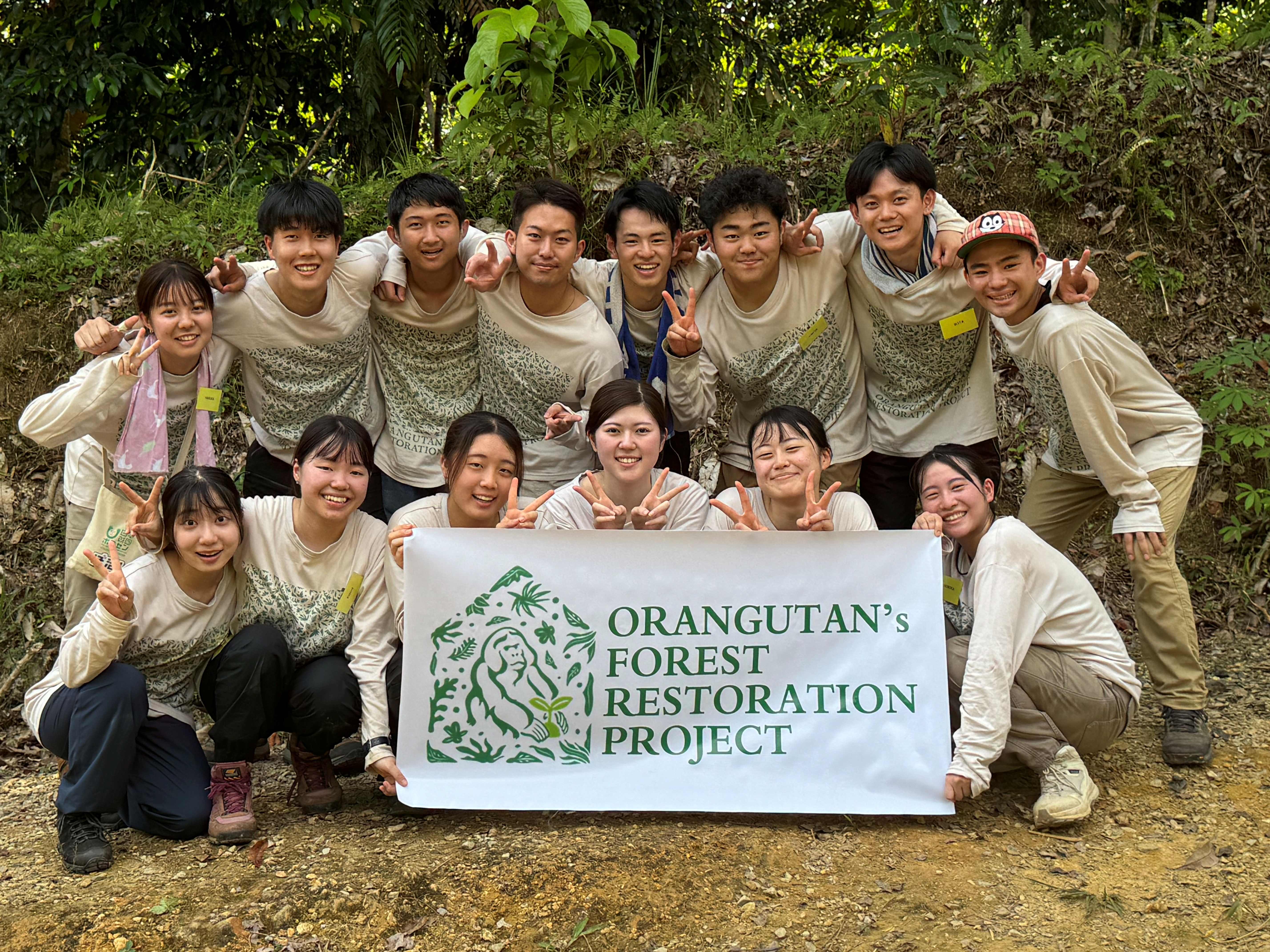
Group photo of the third group
Closing Thoughts
With this visit, the first year of the Orangutan Forest Restoration Project has been successfully completed. We were able to see it through thanks to the efforts of the Nippon Foundation Volunteer Centre staff and local coordinators Kazue Sakai and Aisha, along with the many others who supported us along the way. We are deeply grateful to all of them.
Year two of the project is now set to begin. We are thankful to the first and second groups for making such a strong start, and to the third and fourth groups for enriching the program and paving the way for those who will follow. Above all, it brings us great joy that every participant completed the program safely and came away with positive experiences to share. This project exists because of its students, and we will do our very best to ensure the fifth through eighth groups — and every group after — have equally valuable experiences.