
Malaysia Visit Report: Calls on Partner Organizations in Kuala Lumpur and Penang State
※ This article originally appeared in Malaysia, Vol. 57, the JMA member newsletter (published May 25, 2025) in Japanese and can be found here.
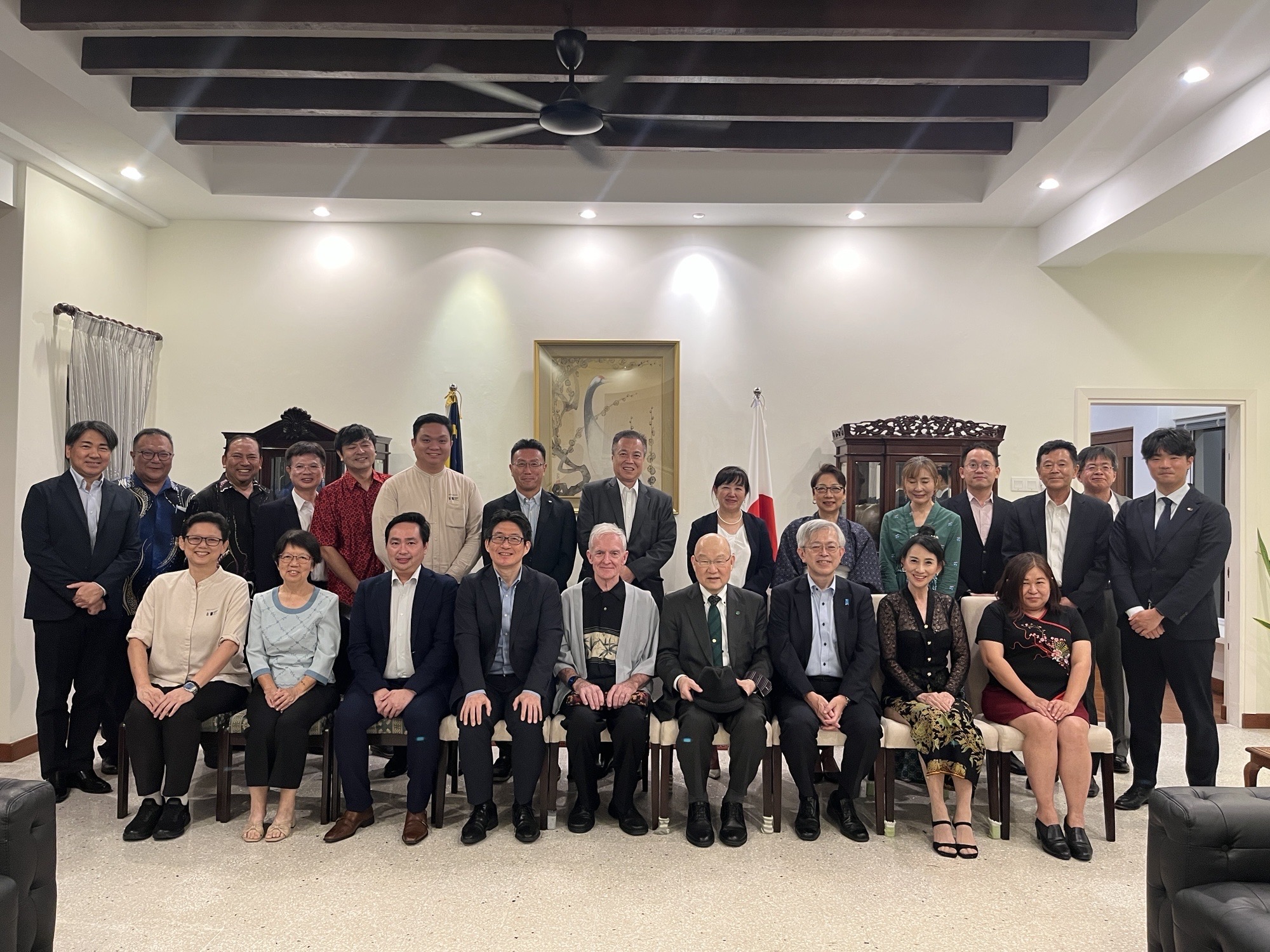
Group photo at the dinner reception at the Consul General’s official residence in Penang
It has been roughly a year and a half since Yuma Kosuga joined the Japan Malaysia Association (JMA) Secretariat in October 2023. Since then, he spent approximately two months in Sarawak, Malaysia, gaining hands-on experience at tree-planting sites and engaging with local communities. Back at the JMA office in Tokyo, he has been learning the practicalities of running a public interest corporation while continuing to travel between Japan and Malaysia, building up his experience primarily in Sarawak.
That said, while his work has been concentrated on the rainforest restoration project in Sarawak, he had not yet had the opportunity to call on partner organizations on the Malay Peninsula. To address this, from February 23 to March 2, 2025, Yuma Kosuga visited key partner institutions in Kuala Lumpur and Penang State. The following is a report of that trip.
Introduction
This is Yuma Kosuga from the Japan Malaysia Association. I recently had the opportunity to visit our partner organizations on the Malay Peninsula in Kuala Lumpur and Penang State. The timing was a window of roughly two weeks between the fifth and sixth volunteer groups for the “Orangutan Forest Restoration Project,” which we run in partnership with the Nippon Foundation Volunteer Center — so the schedule was a bit hectic, but I managed to plan the visits well.
My work to date has been centered in Sarawak, and despite being with the JMA for about a year and a half, I had not been able to introduce myself in person to our contacts on the Malay Peninsula side. I had felt bad about this for some time, so I was genuinely happy that, thanks to the support of my colleagues at JMA, I was finally able to meet so many people. My situation has been somewhat the reverse of most — I had grown comfortable in Sarawak while knowing almost nothing about Peninsular Malaysia — so the visits meant more than just introductions; they were an important opportunity to broaden my understanding of the country as a whole.
The visits were arranged through the generous introductions of several JMA colleagues. JMA Advisor Kunihiko Sato (former JICA Malaysia Representative Director) connected me with Minako Sugawara, the current JICA Malaysia Representative Director, and Kazuya Kitazakae, Chief Coordination Officer at the Japanese Chamber of Trade & Industry, Malaysia (JACTIM). JMA Director Ichiro Egami introduced me to Emi Ohno, Managing Director of IHI Power System Malaysia Sdn. Bhd., the local subsidiary of IHI Corporation. JMA Director Takashi Moribayashi connected me with Yoko Sakurai at the Embassy of Japan in Malaysia, and JMA Executive Director Takuji Arai connected me with Consul General Shinya Machida at the Consulate-General of Japan in Penang. Below is a chronological account of each visit.
Visit to the JICA Malaysia Office
After wrapping up the project in Sarawak, I flew from Kuching International Airport to Kuala Lumpur on February 23, 2025. I had only been to Kuala Lumpur once before — I had a brief look around the city, stopped by the Petronas Twin Towers, and visited the Kinokuniya bookstore — so I still can’t claim any real familiarity with the city. I turned in early that first night to be ready for the visits beginning the next day.
The following day, February 24, I visited the JICA Malaysia Office in Kuala Lumpur, where Representative Director Sugawara and Mr. Hafiz, a Senior Program Manager, received me. Mr. Hafiz is a 13th-cohort Look East Policy alumnus and a graduate of the University of Tsukuba. When I presented both the Japanese and English editions of Forty Years of the Look East Policy: 1982–2022 — a bilingual volume published by the JMA as part of its Japan–Malaysia book series — they were genuinely pleased. “That’s exactly it,” Mr. Hafiz said. “A book that actually explains what the Look East Policy is — there really isn’t one. This is a valuable resource.” He was clearly already familiar with the author, Akiko Kato, and the book’s contents, pointing out passages about specific topics and mentioning friends who had studied in Japan under the policy.
We then had a wide-ranging exchange of views: I walked them through the JMA’s activities using our newsletter, and they in turn presented JICA Malaysia’s current programs and future directions. It was a genuinely productive conversation.
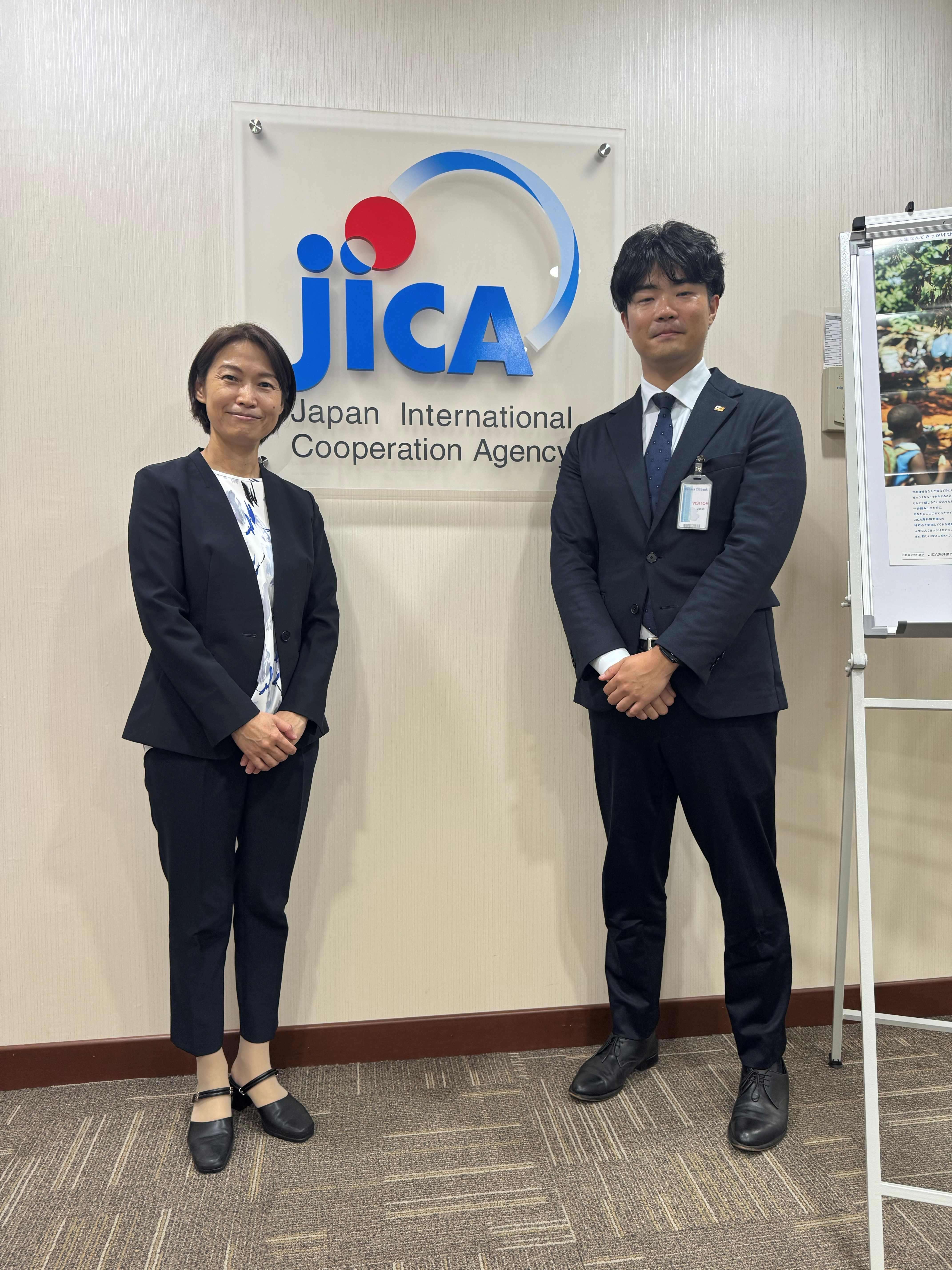
Greeting Representative Director Sugawara at the JICA Malaysia Office
Visit to IHI Malaysia
I had struck up a friendship with a restaurant near my hotel, so Kuala Lumpur was beginning to feel a little more familiar.
On the morning of February 25, I visited IHI Power System Malaysia Sdn. Bhd., the local subsidiary of IHI Corporation, also in Kuala Lumpur. Emi Ohno, Atsushi Kimura, and Mio Okazaki were kind enough to receive me. I introduced myself and explained that a JMA director had connected us — a fairly tenuous link, I’ll admit — but they welcomed me warmly throughout. I opened with an overview of the JMA’s activities, focusing on the rainforest restoration work, which they listened to with evident interest. Mr. Kimura then used a projector to walk me through IHI Malaysia’s operations — from aircraft engines and industrial plant equipment to their growing focus on LNG, hydrogen, and ammonia. Ms. Ohno and I agreed to meet again in Japan with the director who had made the introduction, for a proper dinner — and I’m happy to report that this was not just polite talk; the dinner did indeed happen after I returned.
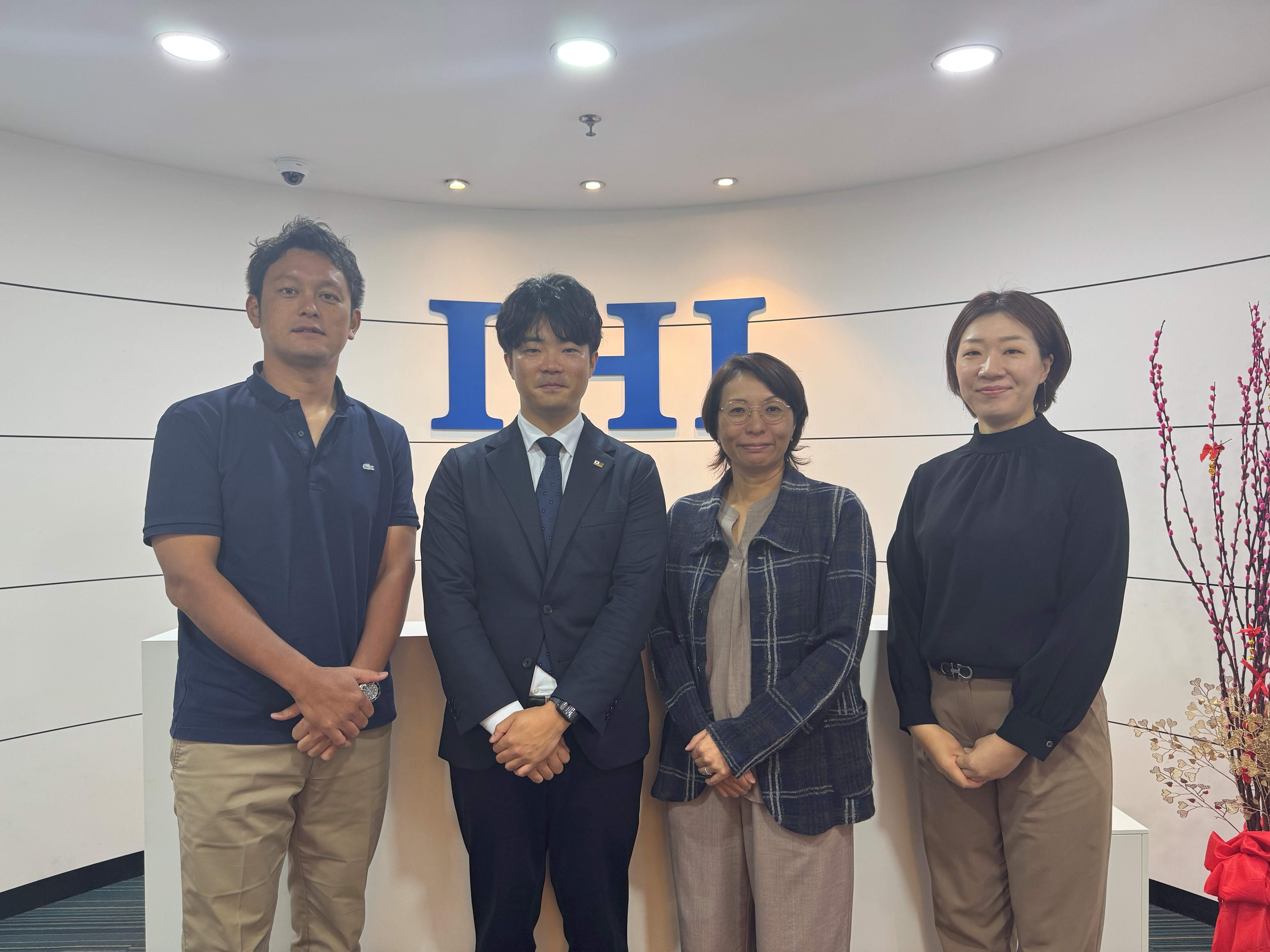
From left: Mr. Kimura, Yuma Kosuga, Ms. Ohno, Ms. Okazaki
Visit to the Embassy of Japan in Malaysia
After IHI Malaysia, I had no time even to stop for lunch — I hailed a Grab and headed straight to the next appointment. I had heard a great deal about the kindness of Yoko Sakurai and Yuuki Tanigai at the Embassy of Japan in Malaysia, and until now my interactions with them had been entirely by email, so I was looking forward to meeting them in person at last.
Later that same afternoon of February 25, I visited the Embassy of Japan in Malaysia in Kuala Lumpur. I am embarrassed to admit that I fumbled at the entrance and was rescued by Ms. Sakurai herself, who happened to be returning from an errand — not the most dignified first impression. Ms. Sakurai and Hiroki Tanaka received me; Mr. Tanigai was away on urgent business that day.
I gave them a detailed briefing on the JMA’s activities and also shared some recent milestones: this year marks the 30th anniversary of the JMA’s tree-planting program; the cumulative number of trees planted is expected to reach one million next year; and the year after that will mark both Malaysia’s 70th year of independence and the 70th anniversary of the JMA’s founding (the JMA was established in December 1956, one month before Malaysia’s formal independence in January 1957). They were particularly interested in the JMA’s book translation and publishing work, and when I mentioned that we are planning to publish a volume on Prime Minister Anwar Ibrahim’s MADANI framework, they said, “We’d love to read that.”
I also mentioned that the JMA’s Tokyo office sometimes receives courtesy visits from diplomats preparing to take up posts in Malaysia — and that I had, in fact, met someone who was about to head to the Embassy just on February 6. This prompted a laugh: “You certainly keep well informed!” The conversation was warm throughout, and they invited me to drop by the next time I am in Kuala Lumpur.
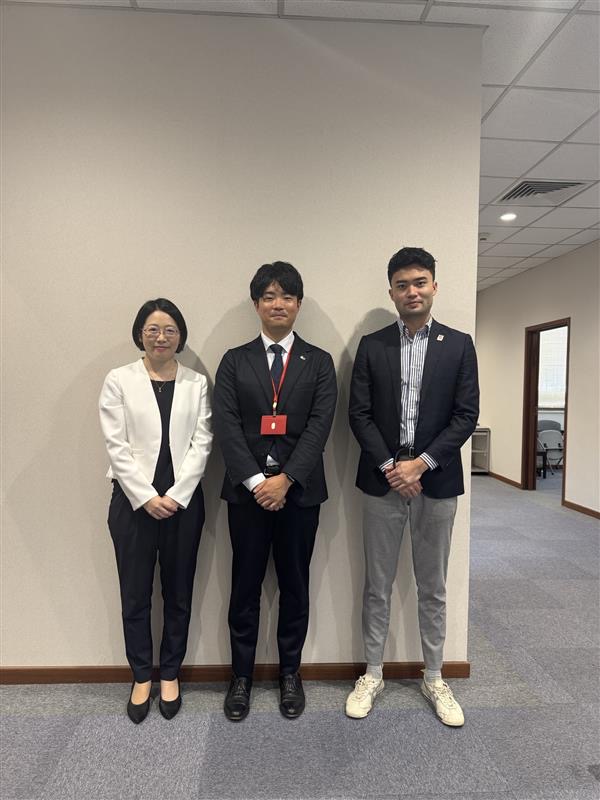
From left: Ms. Sakurai, Yuma Kosuga, Mr. Tanaka
Visit to JACTIM
The JACTIM office appeared to be within walking distance of my hotel, so I decided to go on foot this time rather than take a Grab. I may have been the only person in the sunny Kuala Lumpur city center wearing a suit and tie — I definitely attracted some looks.
On February 26, I visited the JACTIM office in Kuala Lumpur. JACTIM — the Japanese Chamber of Trade & Industry, Malaysia — was established in November 1983 as an economic organization dedicated to promoting the interests of Japanese companies and fostering goodwill among its members. It was set up under Malaysia’s Prime Minister Mahathir Mohamad and Japan’s Prime Minister Yasuhiro Nakasone, with formal authorization from the Malaysian government. Kazuya Kitazakae and Yuki Kida received me that day and were eager to hear about the JMA’s work. Mr. Kitazakae reflected that while the private sector and public-interest organizations serve different roles, they share the same core values at their root. We discussed how companies might turn their attention to Sarawak — a highly autonomous state where the JMA’s rainforest restoration work is based — and how to structure economic flows so that money genuinely benefits local communities. It was a productive exchange of ideas on how we might collaborate going forward.
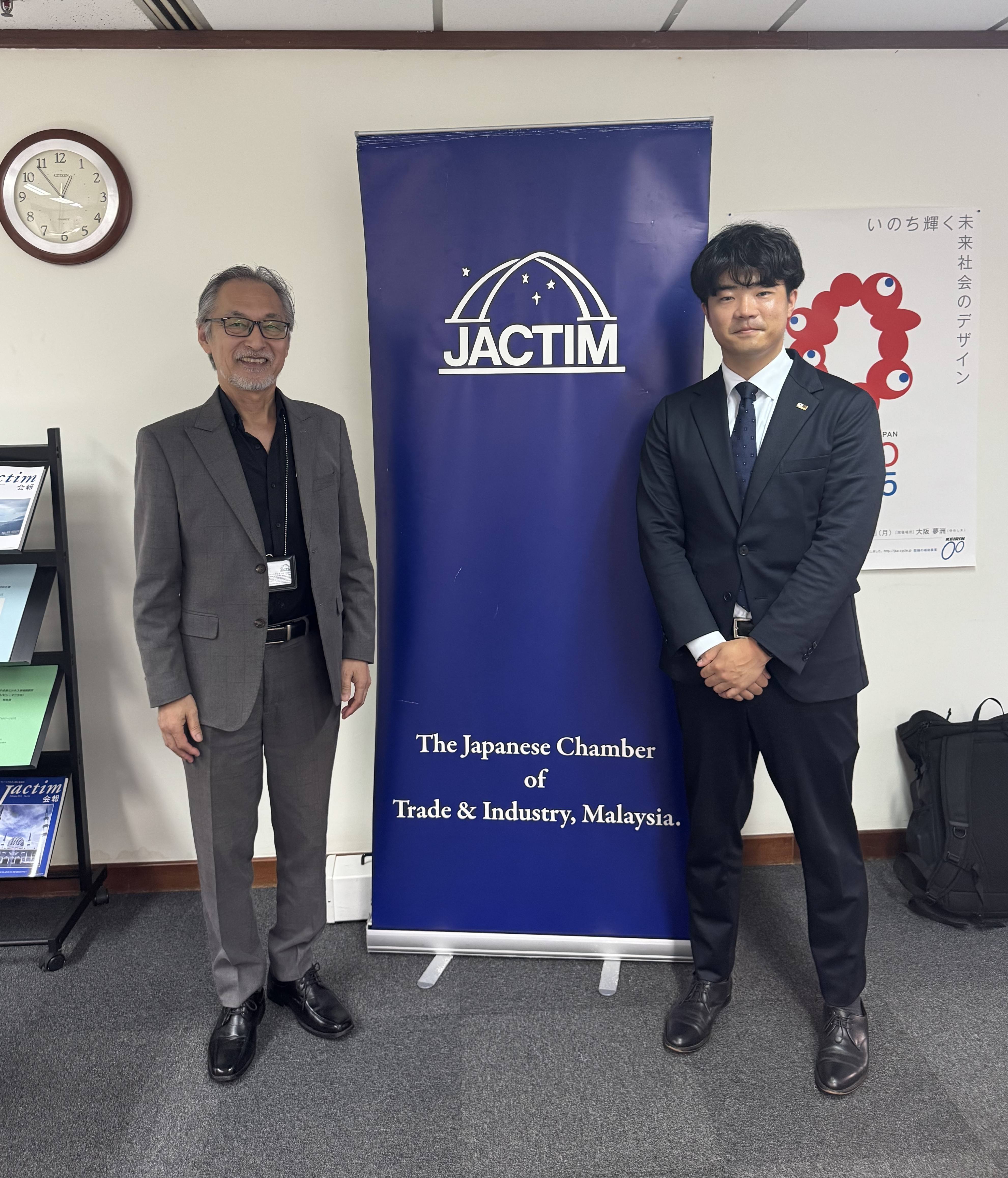
Greeting Mr. Kitazakae at JACTIM
Visit to the Consulate-General of Japan in Penang
Having concluded my Kuala Lumpur visits, I flew from Kuala Lumpur International Airport to Penang State on February 27. It was my first time in Penang, so I spent the afternoon exploring the city before turning in early. The following day, February 28, I called on the Consulate-General of Japan in Penang, located in Georgetown, the state capital. Consul General Shinya Machida received me and I gave him an update on the JMA’s activities. I had first met Consul General Machida on November 8, 2024, at the JMA’s Tokyo office before he took up his post — so this was a welcome reunion, this time in Penang.
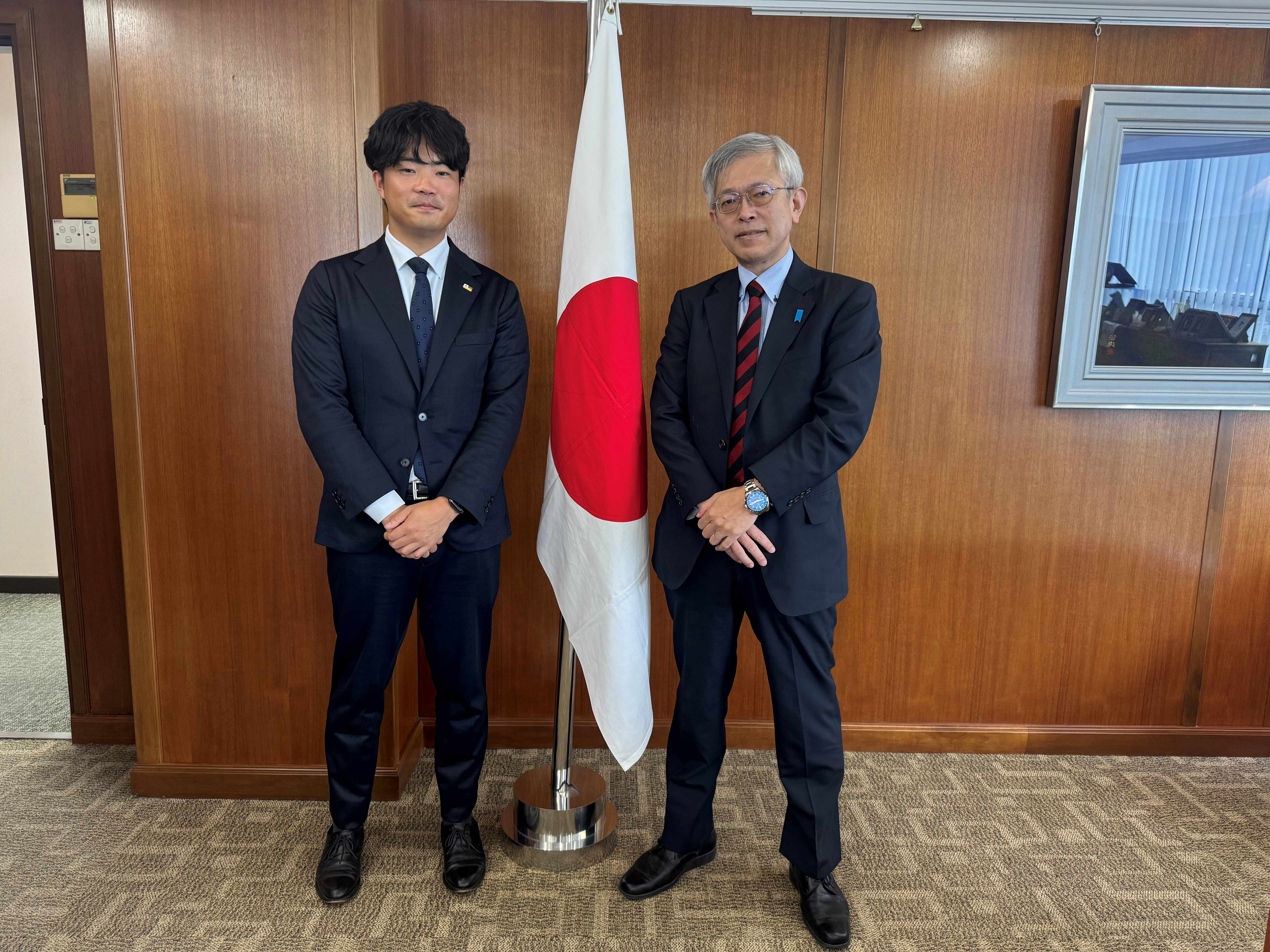
Greeting Consul General Machida at the Consulate-General of Japan in Penang
Dinner Reception at the Consul General’s Residence
On the same evening as my consulate visit, I was honored to accept Consul General Machida’s invitation to a dinner reception at the official residence. The guests included staff from the Consulate-General, members of the Japanese Association of Penang, as well as representatives from ALEPS (Alumni Look East Policy Society) and JAGAM (Japan Graduates’ Association of Malaysia) — a broad gathering of communities with ties to Japan in Penang State.
In his opening remarks, Consul General Machida mentioned both the JMA and my name, which prompted many of the guests to come and speak with me. Since our work includes not only the rainforest restoration program in Sarawak but also mangrove restoration planting in Penang State and Kedah State, many found our projects particularly interesting. The ALEPS and JAGAM members — who had studied in Japan — were especially enthusiastic, saying they would be happy to help with planting activities or any other collaboration whenever the opportunity arose. Several ALEPS members also knew Mr. Hafiz, whom I had met at JICA Malaysia, reinforcing just how tight-knit the Look East Policy alumni network is.
Group photo at the dinner reception at the Consul General’s official residence
Closing Thoughts
I am still very much a junior member of the team, but thanks to the support of everyone at the JMA, I was able to meet so many wonderful people in Malaysia. I will do my best to nurture these connections and continue to grow. Thank you all for your continued encouragement.
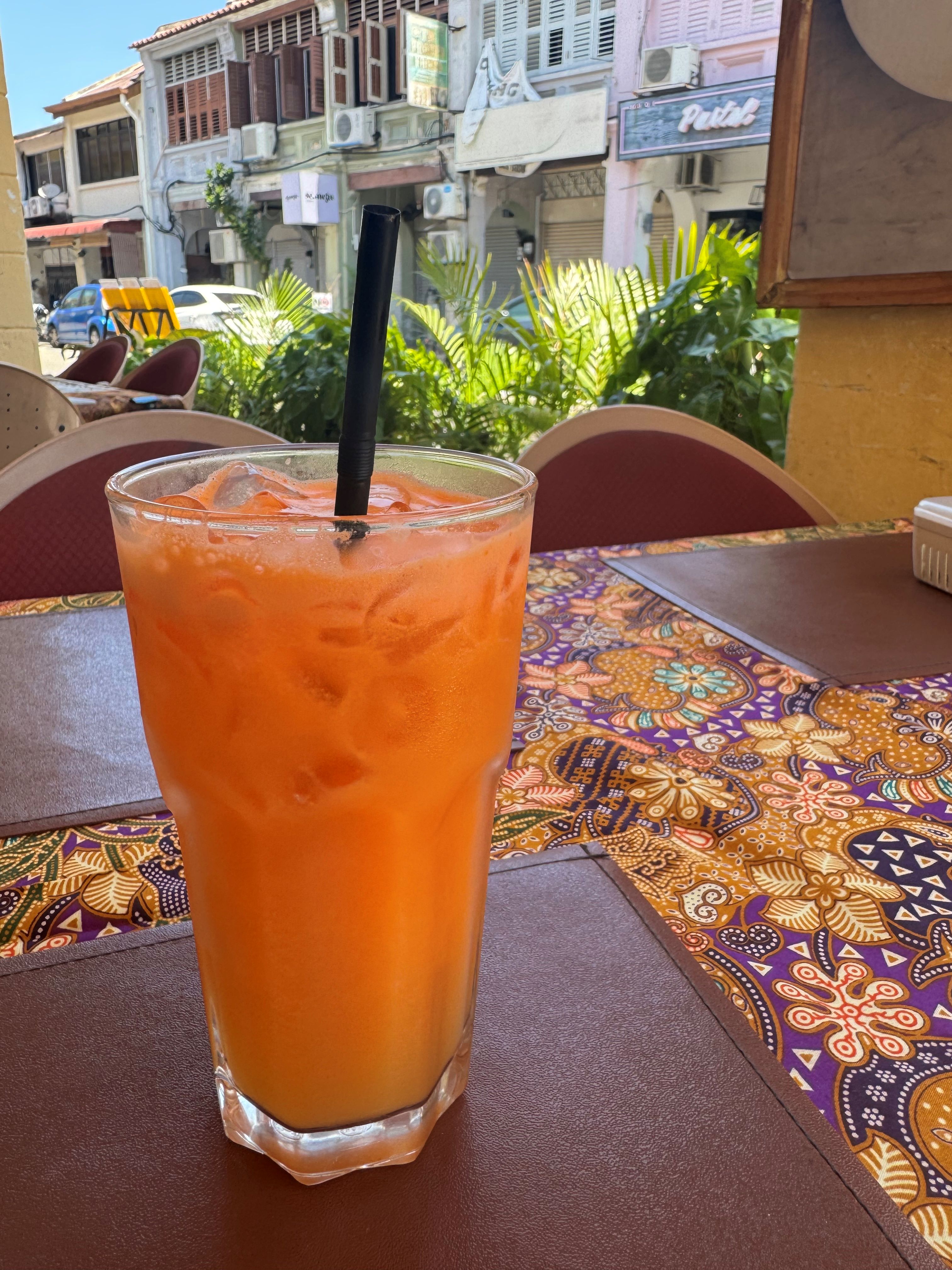
A moment of rest in Georgetown, Penang State