
Nippon Foundation Chairman Visits Orangutan Forest Restoration Project Site in Sarawak
The original of this article was written in Japanese and can be found here.
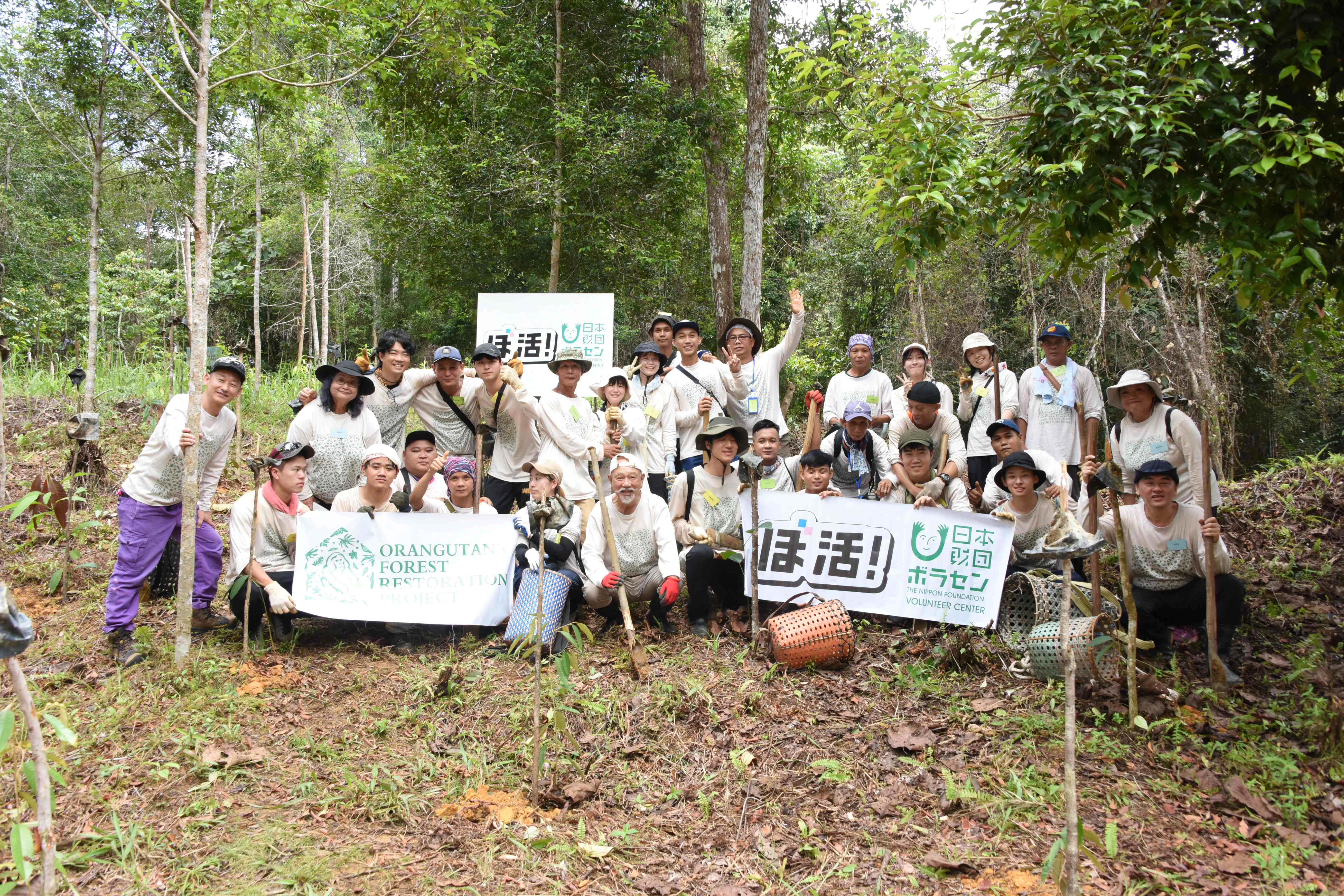
Photos courtesy of The Nippon Foundation.
In partnership with the Nippon Foundation Volunteer Center (referred to below as the NF Volunteer Center), the Japan Malaysia Association (JMA) launched the “Orangutan Forest Restoration Project” in 2024. Under this initiative, university students from across Japan are sent to Sarawak, Malaysia, to take part in tropical rainforest restoration through tree planting alongside indigenous villagers. The project aims to plant 100,000 trees over ten years, dispatching groups of approximately 15 student volunteers four times a year. Students apply through “Bokatsu!” (https://vokatsu.jp/), one of Japan’s largest volunteer platforms provided by the NF Volunteer Center, which handles all selection.
On September 1, 2024 — while the project’s fourth student cohort was in the field — Yohei Sasakawa, Chairman of The Nippon Foundation (who stepped down as Chairman and became Honorary Chairman on June 17, 2025), visited the “Orangutan Forest Restoration Project” planting site inside Apen National Park in Sarawak.
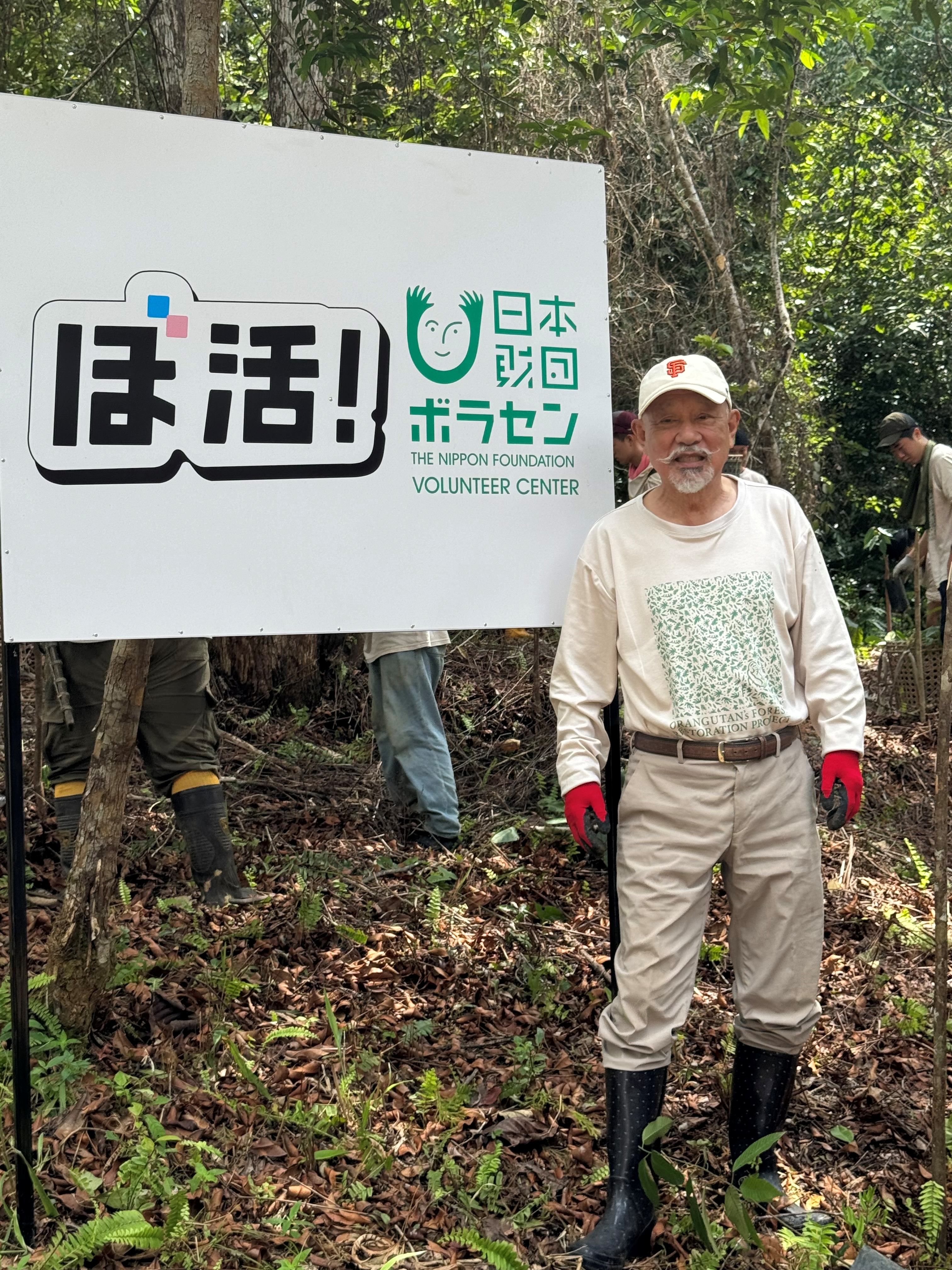
At the Orangutan Forest Restoration Project planting site inside Apen National Park, Sarawak
Sasakawa joined the students in the planting work, digging holes and removing seedlings from their pots to plant them in the ground — showing a vigor that belied his age.
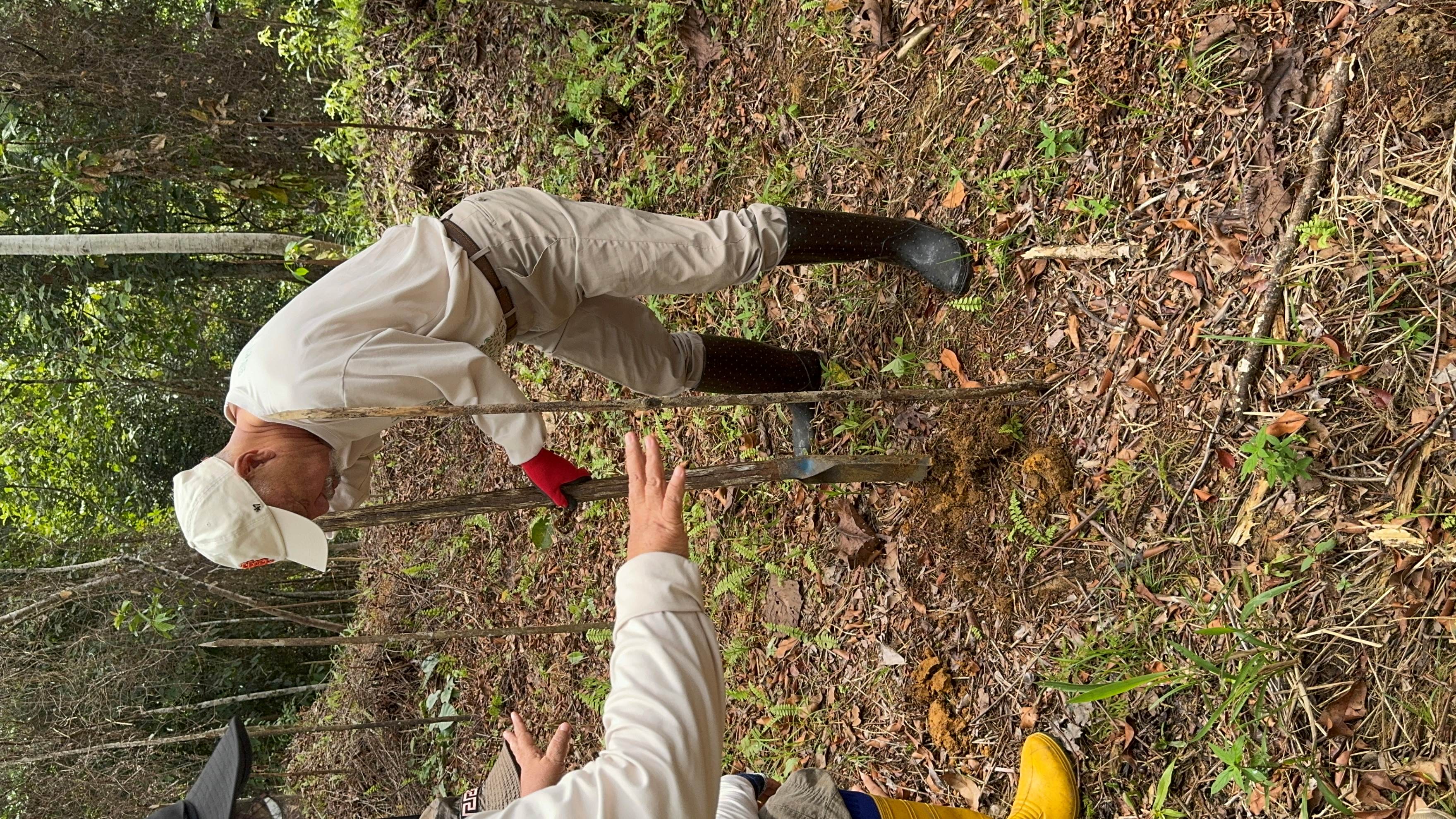
Digging holes for planting
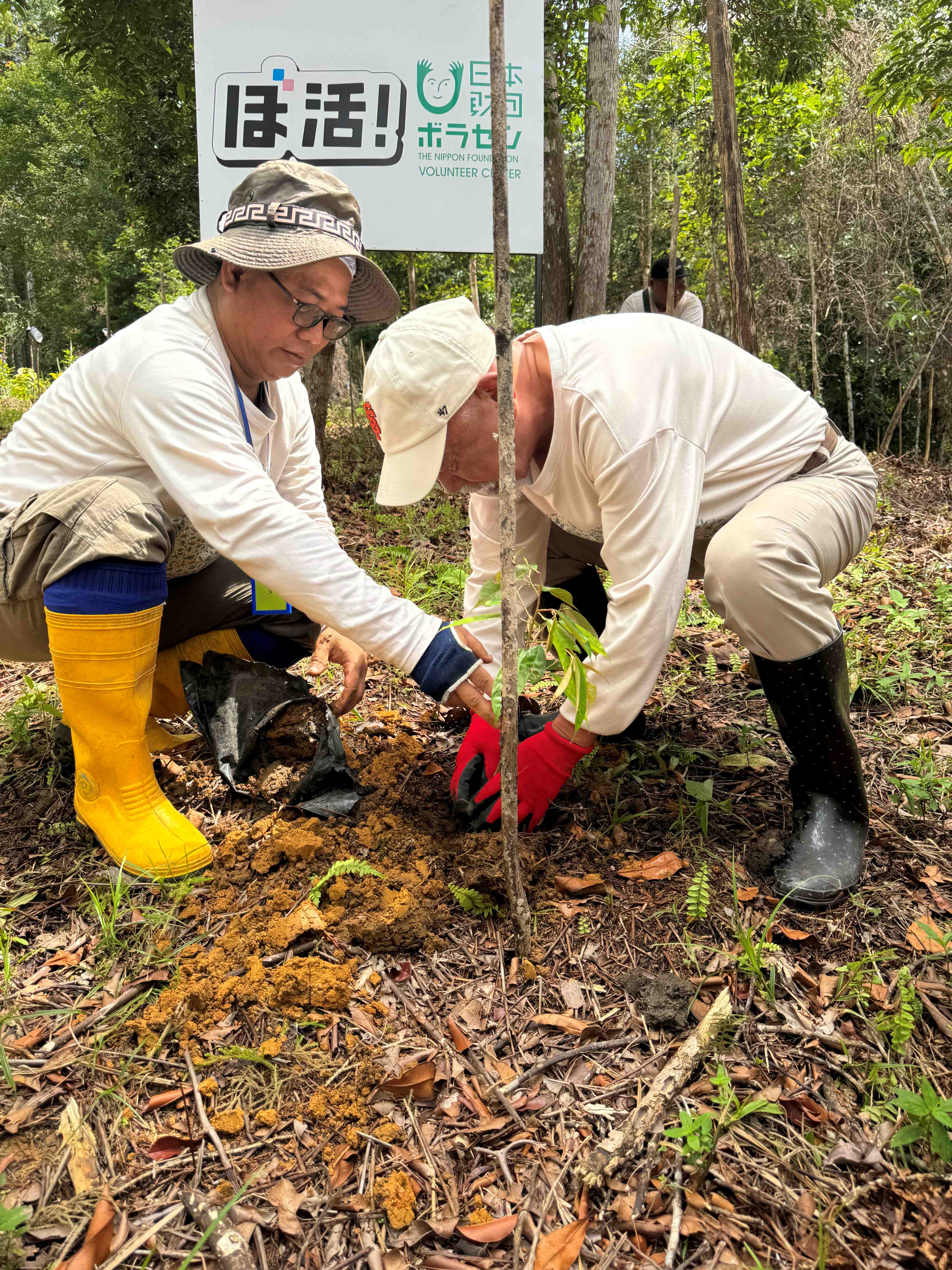
Removing seedlings from pots and planting them
He kept at it long after a single ceremonial tree would have sufficed, digging multiple holes and planting several trees alongside the students.
In his personal blog, Sasakawa wrote about the experience: “I planted about three durian seedlings to mark the occasion. Unlike Japan’s soil, the clay here is hard and compacted — it takes real physical effort to break through. The spade is narrower and sharper than the ones we use in Japan, and you have to drive it into the clay again and again.” (Paraphrase of blog entry)
We hope that spending a day like this gave him a real sense of the effort students and local villagers put in every single day.
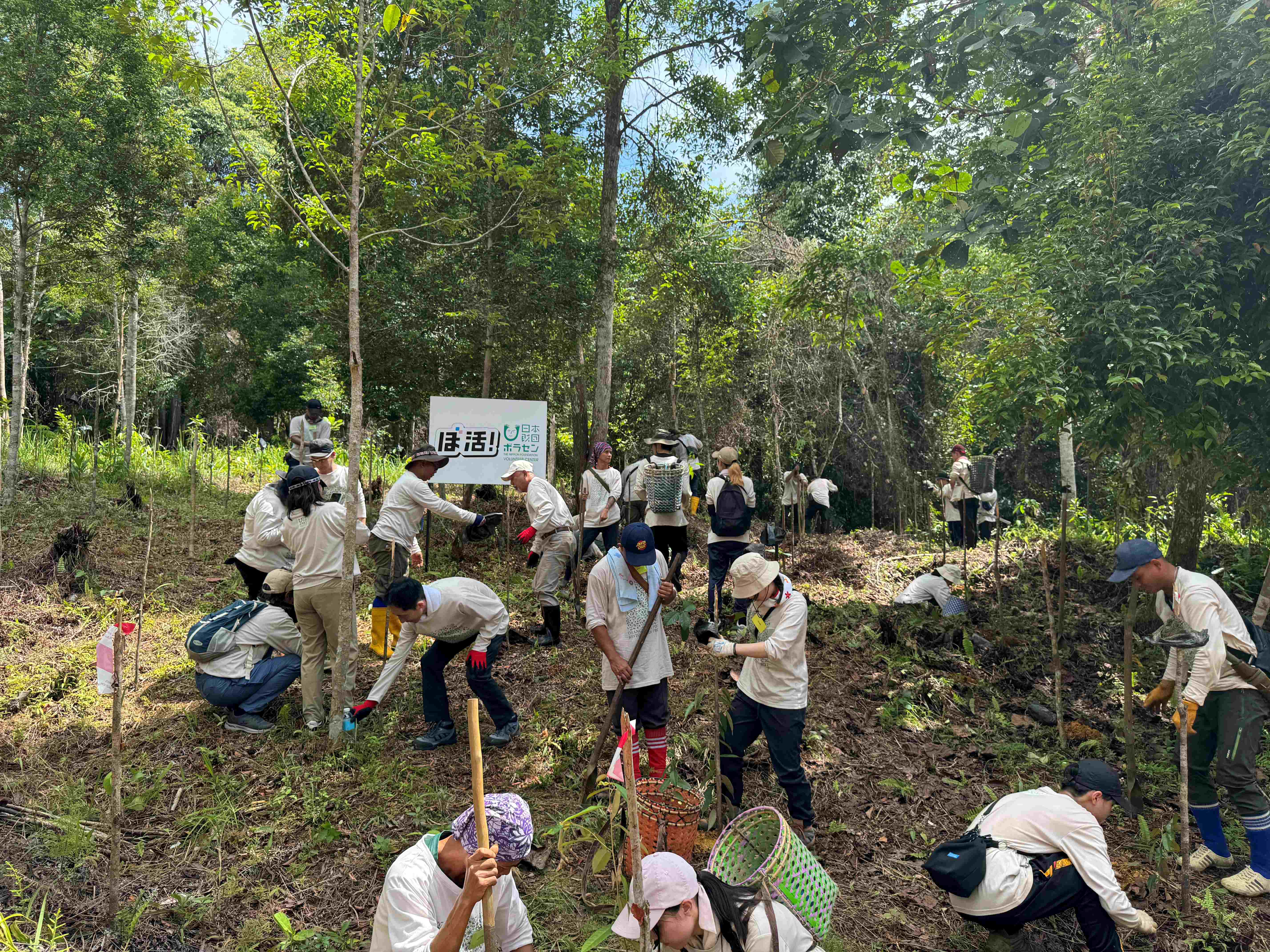
Planting trees alongside the student volunteers
After the planting session, Sasakawa also visited the seedling nursery adjacent to Apen National Park’s facilities, where JMA’s Sarawak-based coordinator, Kazue Sakai, briefed him on the tropical rainforest restoration work.
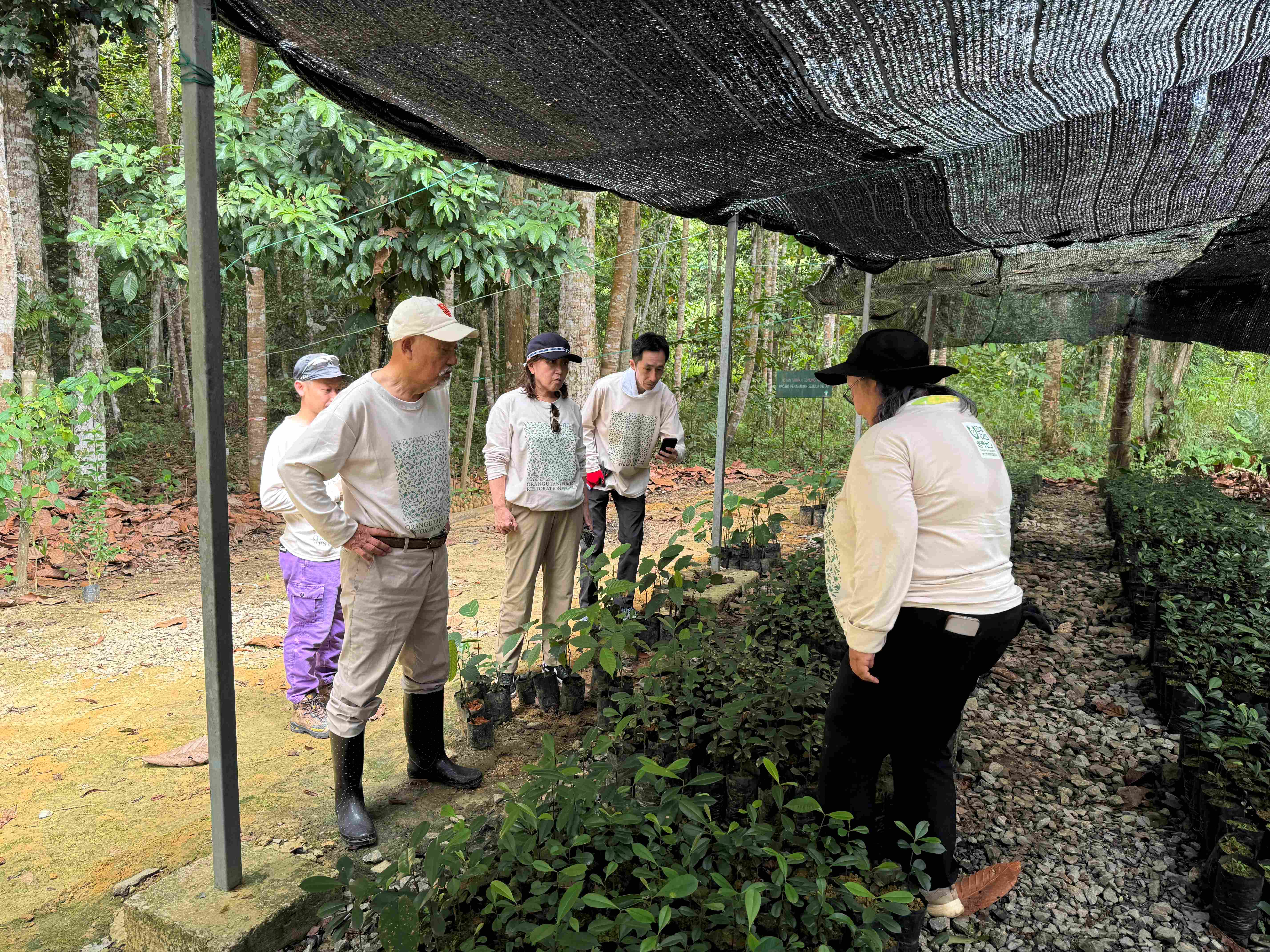
Receiving a briefing from Coordinator Kazue Sakai at the Apen Nursery, which cultivates and manages approximately 10,000 seedlings
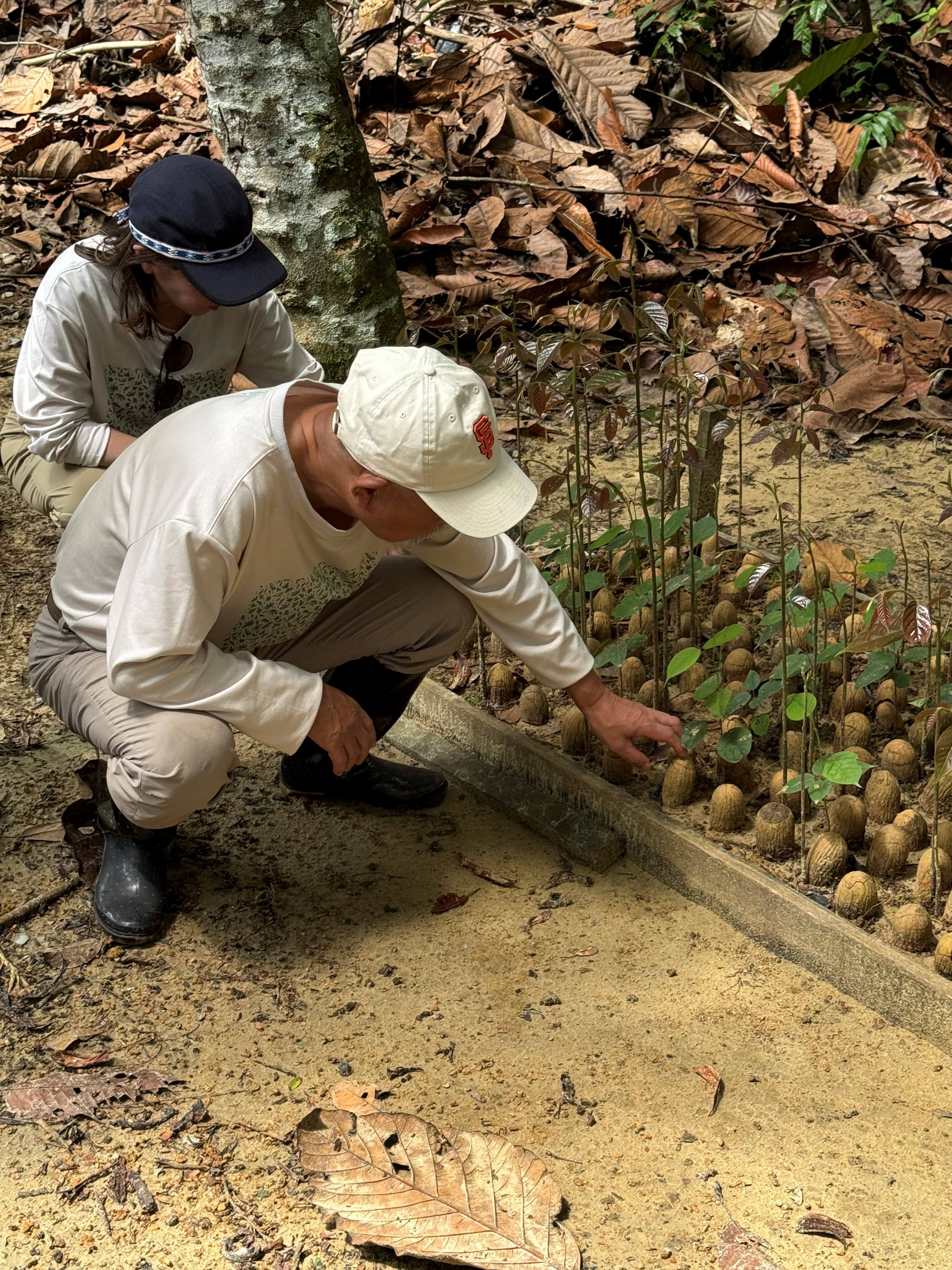
Inspecting rare ironwood seedlings being cultivated at the nursery
After the planting activities, Sasakawa had lunch with the students, and the conversation ranged freely — from the work of The Nippon Foundation to everyday topics.
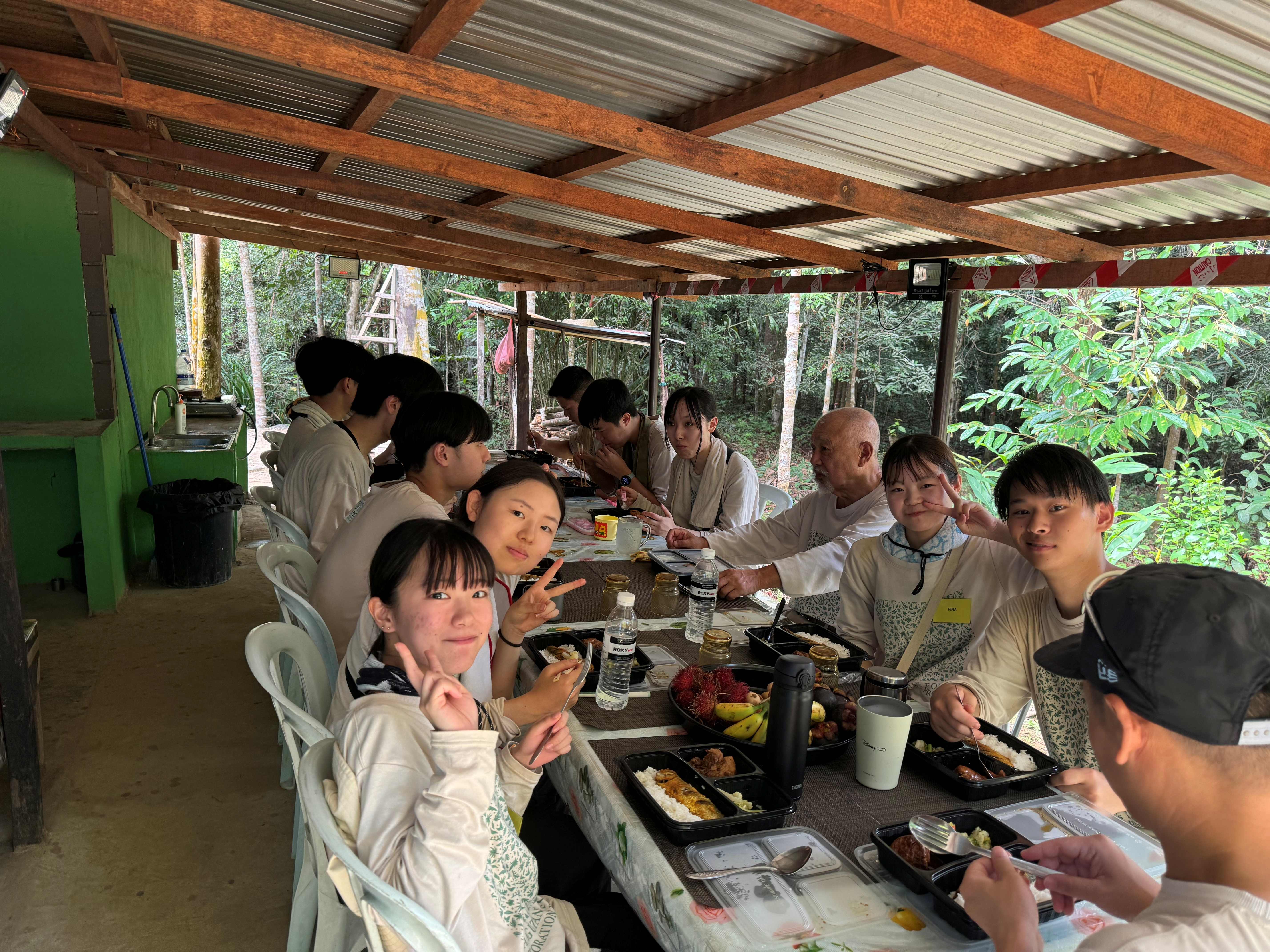
Lunch with the fourth cohort of student volunteers
This project, which launched in 2024, is a ten-year commitment undertaken in collaboration with the NF Volunteer Center. Over that decade, we will need to explore a range of program approaches to ensure that students involved in tropical rainforest restoration in Sarawak, Malaysian Borneo, continue to gain meaningful experiences, insights, and learning opportunities. Against that backdrop, having Sasakawa see the planting site and the students’ work in person — in the very first year of the project — was deeply significant.
Read More on Chairman Sasakawa’s Blog
The visit is also covered in detail on the blog of Yohei Sasakawa, Honorary Chairman of The Nippon Foundation (Yohei Sasakawa Blog). We encourage you to take a look.
Part 1 covers Sasakawa’s planting experience and his time with the students:
“Orangutan Forest Restoration” — Nippon Foundation Volunteer Center, Part 1
Part 2 features JMA’s Sarawak Coordinator Kazue Sakai and an introduction to the Japanese cemetery in Kuching:
“Orangutan Forest Restoration” — Nippon Foundation Volunteer Center, Part 2