
Status Report on Rainforest Restoration and Community Support Activities
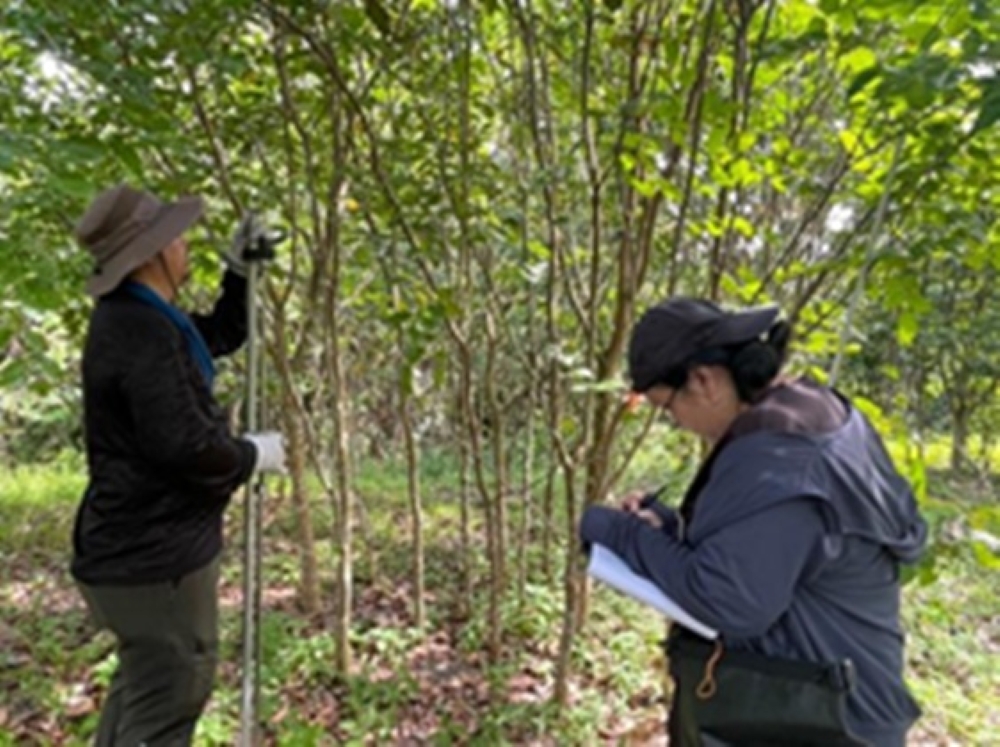
Recording the growth of previously planted trees at Universiti Malaysia Sarawak (UNIMAS)
The original of this article was written in Japanese and can be found here.
Since 1995, the Japan Malaysia Association (JMA) has been conducting tree-planting activities in Sarawak, on the island of Borneo, to restore tropical rainforests — made possible through the support of corporations, organizations, and individuals. Our work centers on revegetating lowland tropical rainforest in degraded secondary forest through the planting of native species including dipterocarps. Since 2017, we have also been working to conserve wetland forests through mangrove planting. In 2018, we extended our mangrove restoration activities to Kedah State on the Malay Peninsula, bringing our total footprint to two regions across Borneo and the Peninsula.
Alongside rainforest restoration, JMA engages communities through participatory programs designed to provide direct support to local residents.
When the COVID-19 pandemic spread through Malaysia in 2020, strict movement control orders were put in place and many social activities came to a halt. Even so, with government authorization, local communities were able to continue seedling nursery work, maintenance of existing planted trees, and new planting operations throughout the period.
Since all restrictions were lifted and social and economic life returned to normal, our activities have continued in line with Malaysian government guidelines. This report covers activities conducted from April through July of this year, picking up where the previous issue left off.
Activities in Sarawak
● Tropical Rainforest Restoration
In the Serian District — at Apen National Park, Sabal National Park, and adjacent protected forest reserves — JMA is implementing the “Community-Based Tropical Rainforest Restoration Project in Indigenous Communities of Sarawak” (supported by Mitsubishi Corporation), the “PPP Project” (supported by JAC Recruitment), and the “JAC Recruitment Forest” project, all in collaboration with state government agencies, Universiti Malaysia Sarawak (UNIMAS), and local communities. At Apen National Park, weeding, infilling, and other maintenance work were carried out in the existing planted areas from April through May. From June through July, access road repairs were undertaken in preparation for future activities.
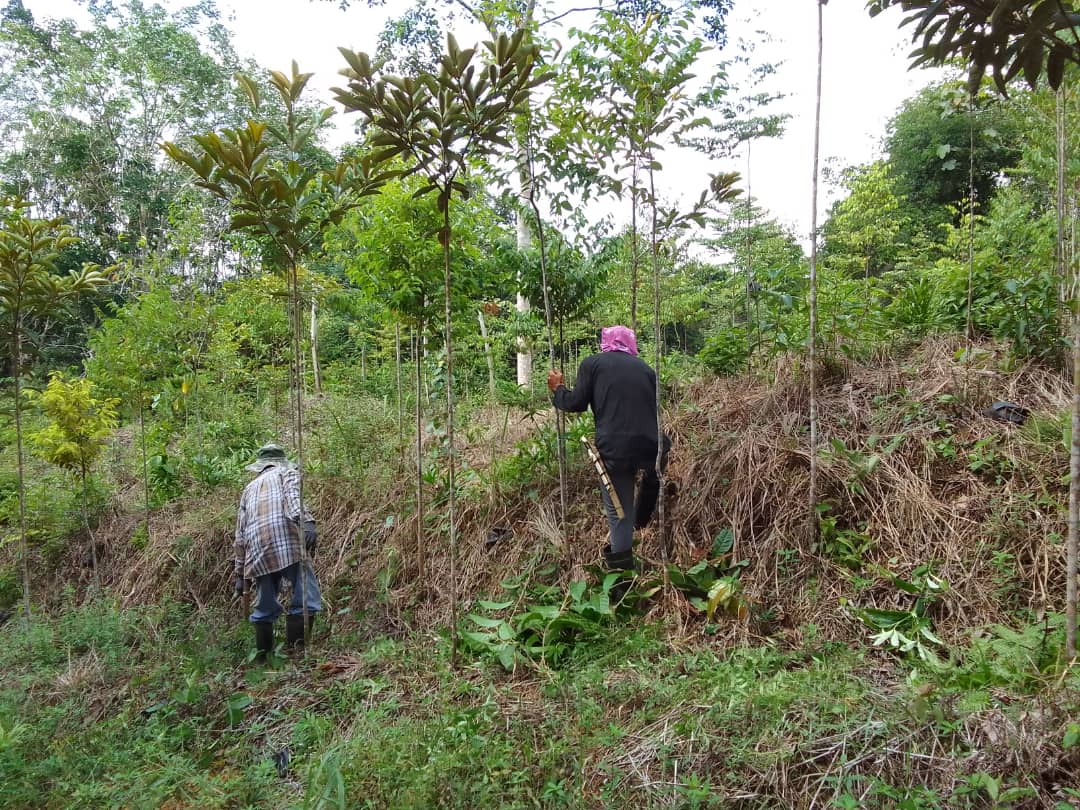
Weeding in the planted area
At Sabal National Park, maintenance work including weeding and infilling was carried out in the existing planted areas from April through May. In June, 1,500 native species — dipterocarps and native fruit trees — were planted at the “JAC Recruitment Forest” project site. In July, 1,000 native species and fruit trees were planted at the “Mitsubishi Corporation Rainforest Restoration Project” site.
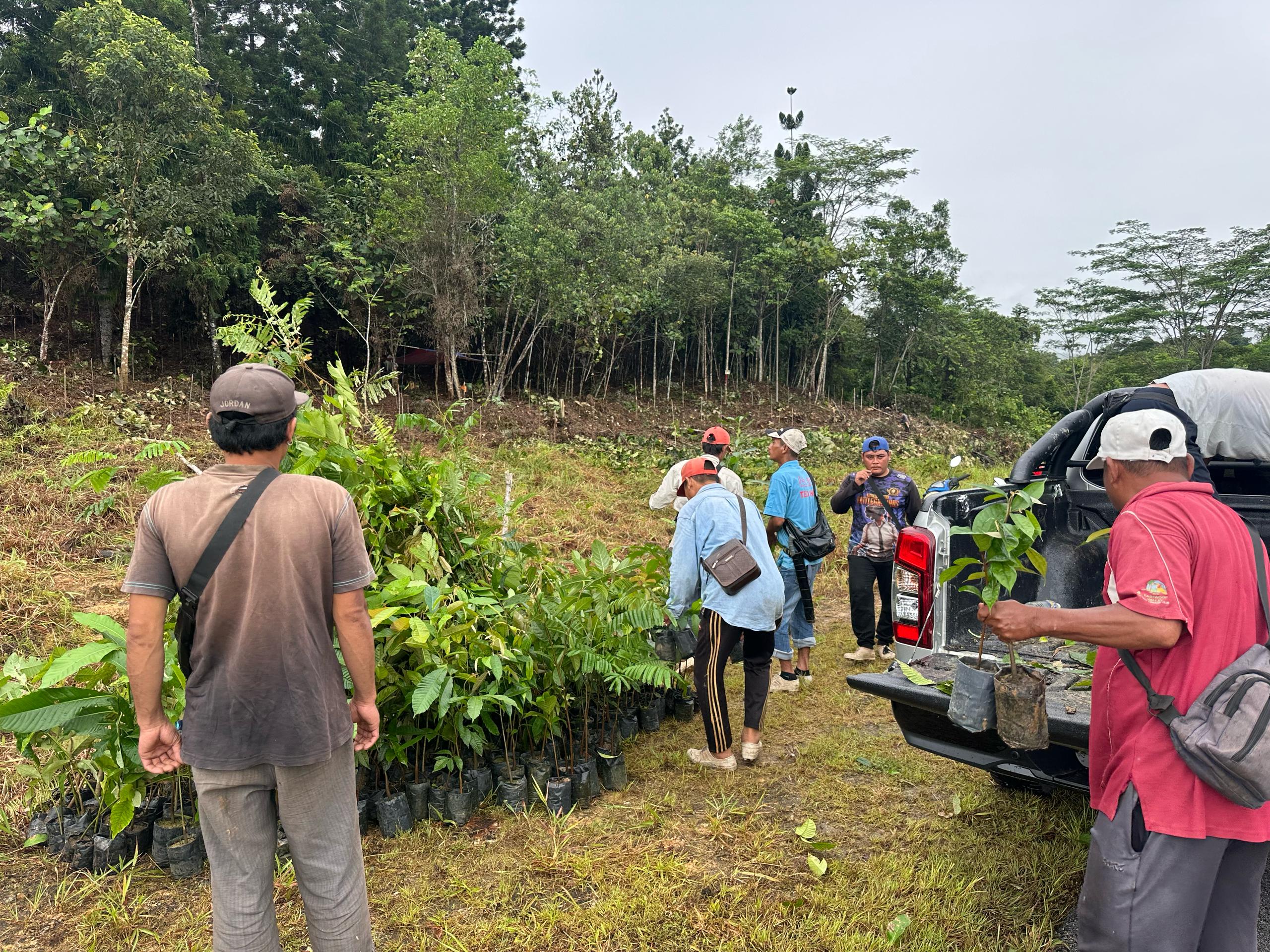
Transporting seedlings for planting
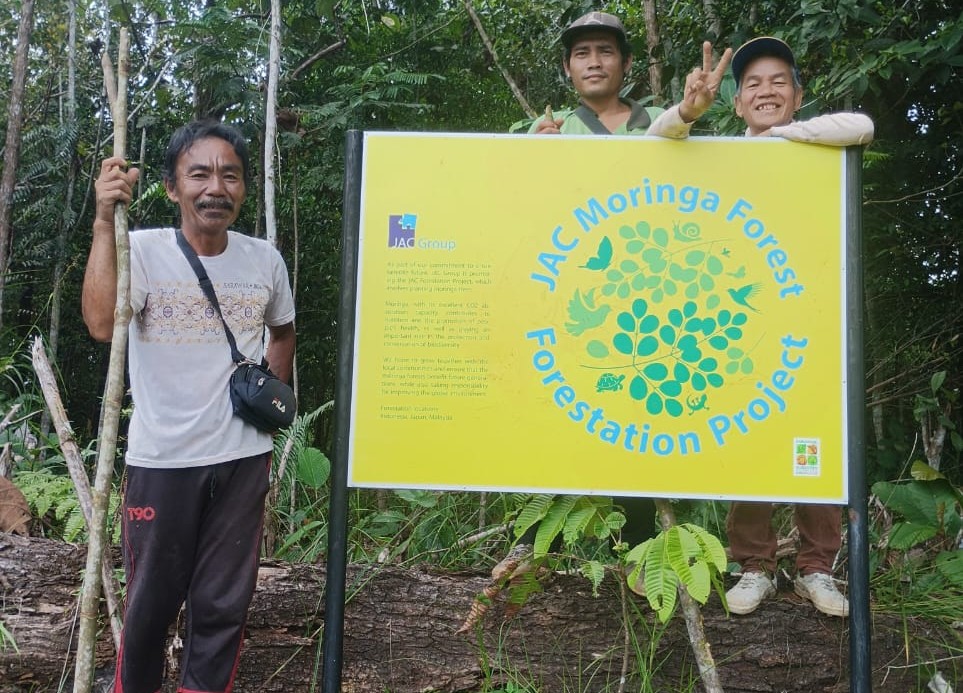
Participants gather in front of the project signboard after the work is done
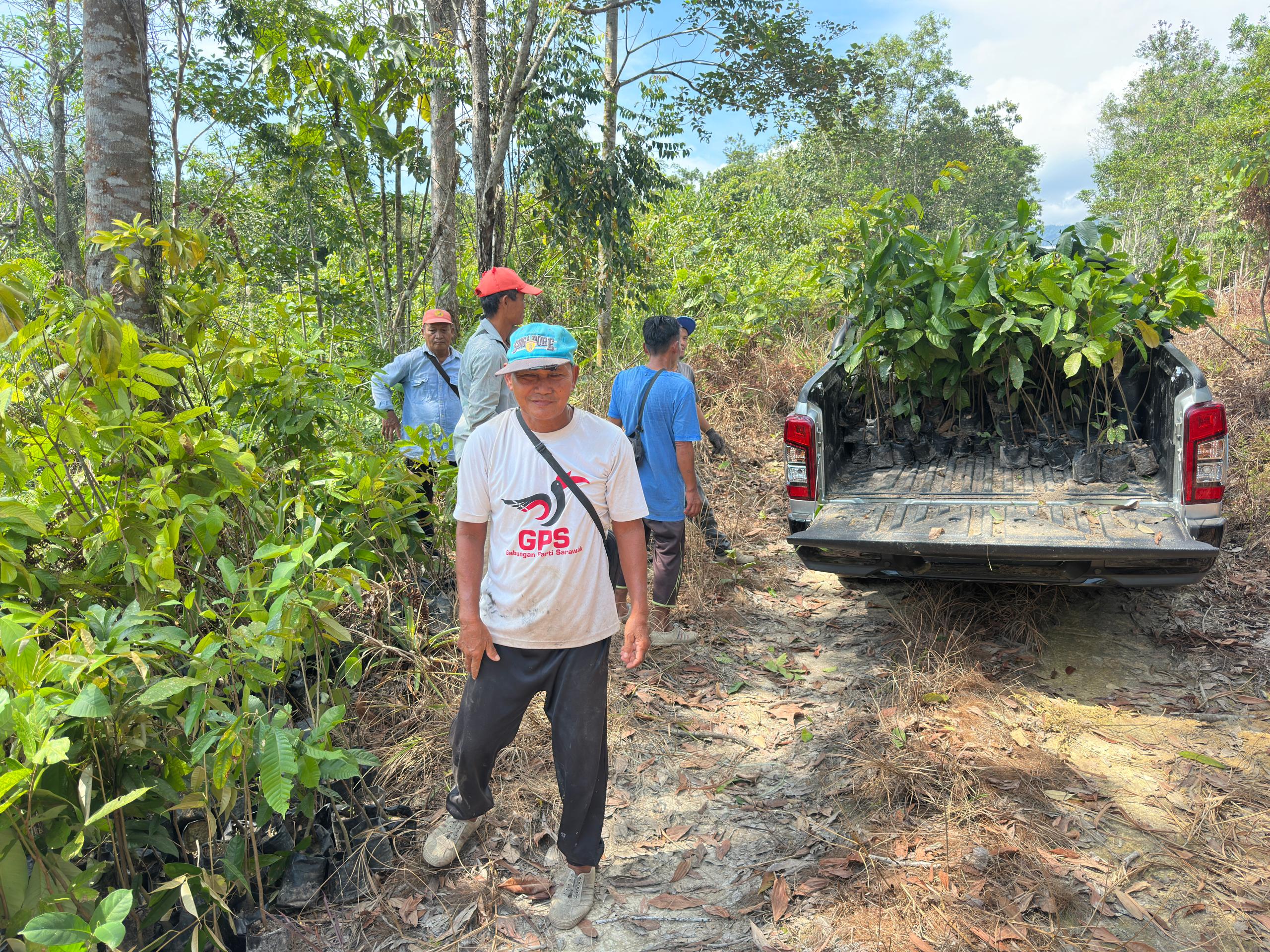
Transporting and planting 1,000 trees
Nursery work is ongoing at the dedicated nursery of the Sabal Forest Landscape Restoration (FLR) Centre, where dipterocarps and other native species collected and transplanted in February of this year continue to grow well.
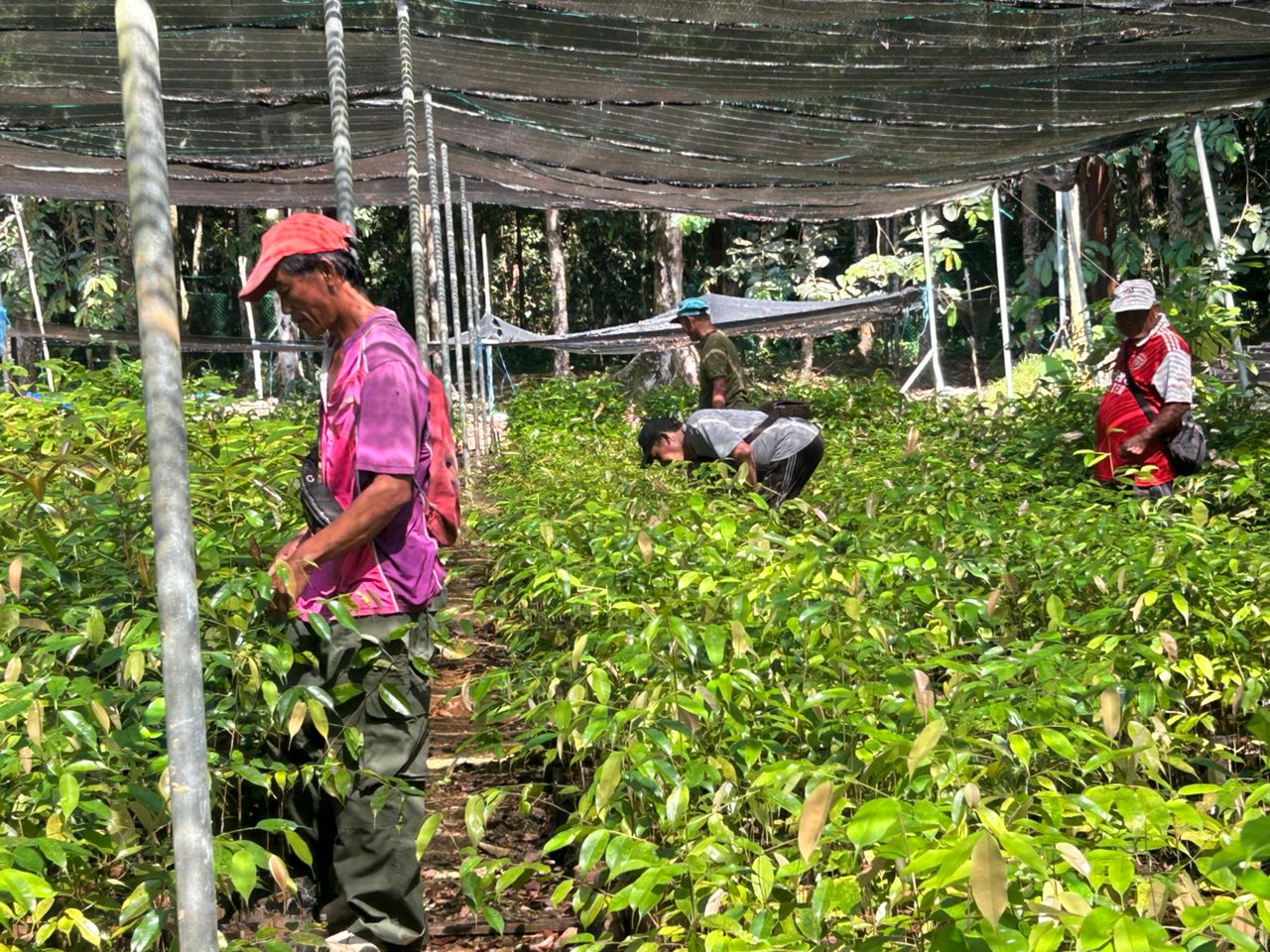
Seedling nursery management
● Village Women’s Seedling Nursery Program
To improve livelihoods and encourage greater participation among residents of the planting areas, JMA runs a seedling nursery program operated by village women. In June and July, 1,000 seedlings grown by women in villages around Sabal National Park were purchased and planted.
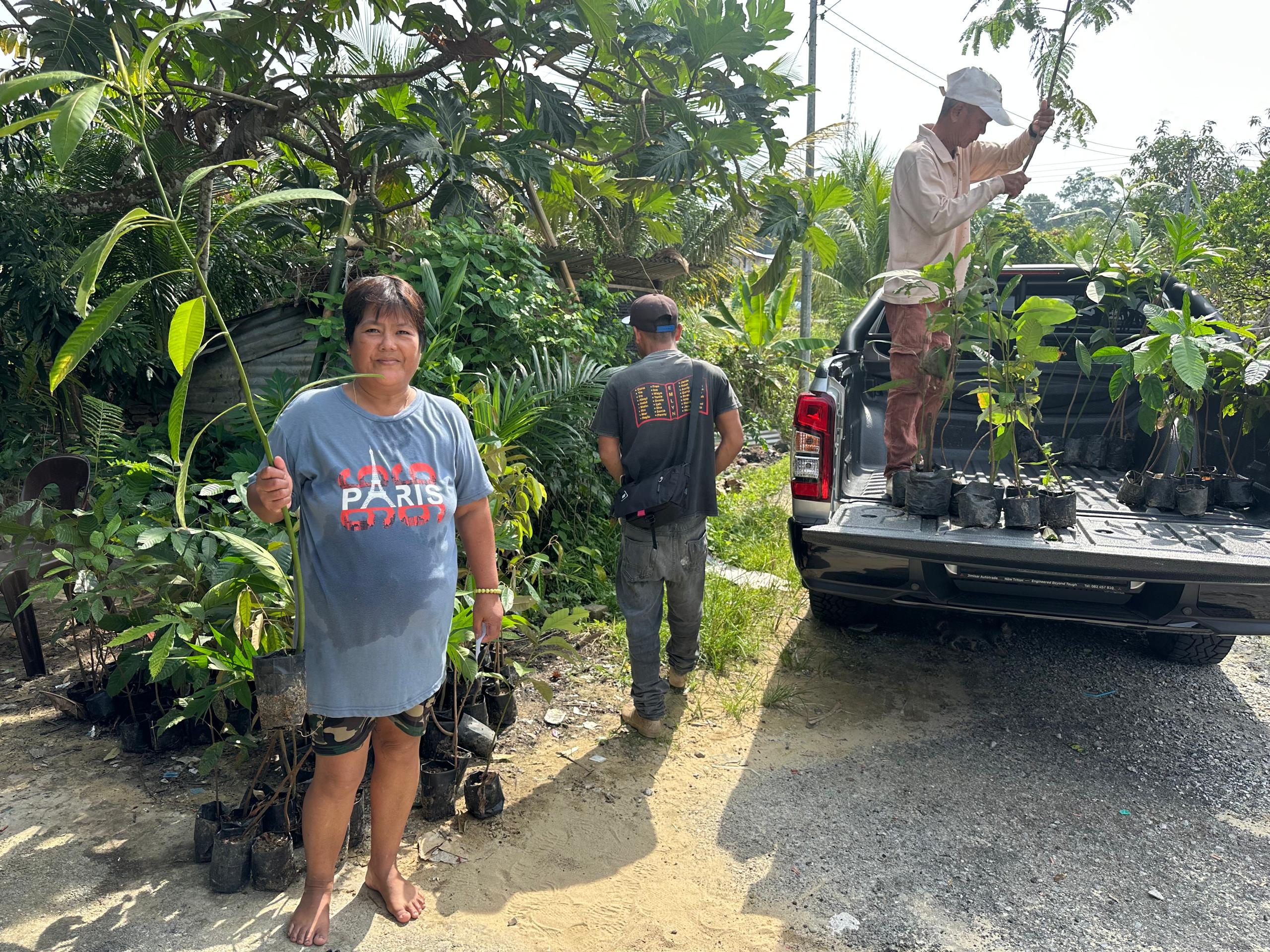
Village women participating in the activities
● Youth Training Program
Working together with schools near Apen National Park, JMA implements the “Kinoshita Forest Youth Training Program” with the support of Kinoshita Group. On Saturday, May 24, fifty students and teachers from Balai Ringin Secondary School joined faculty members from Universiti Malaysia Sarawak (UNIMAS) and state government officials for a tree-planting session and a program designed to boost motivation for learning.
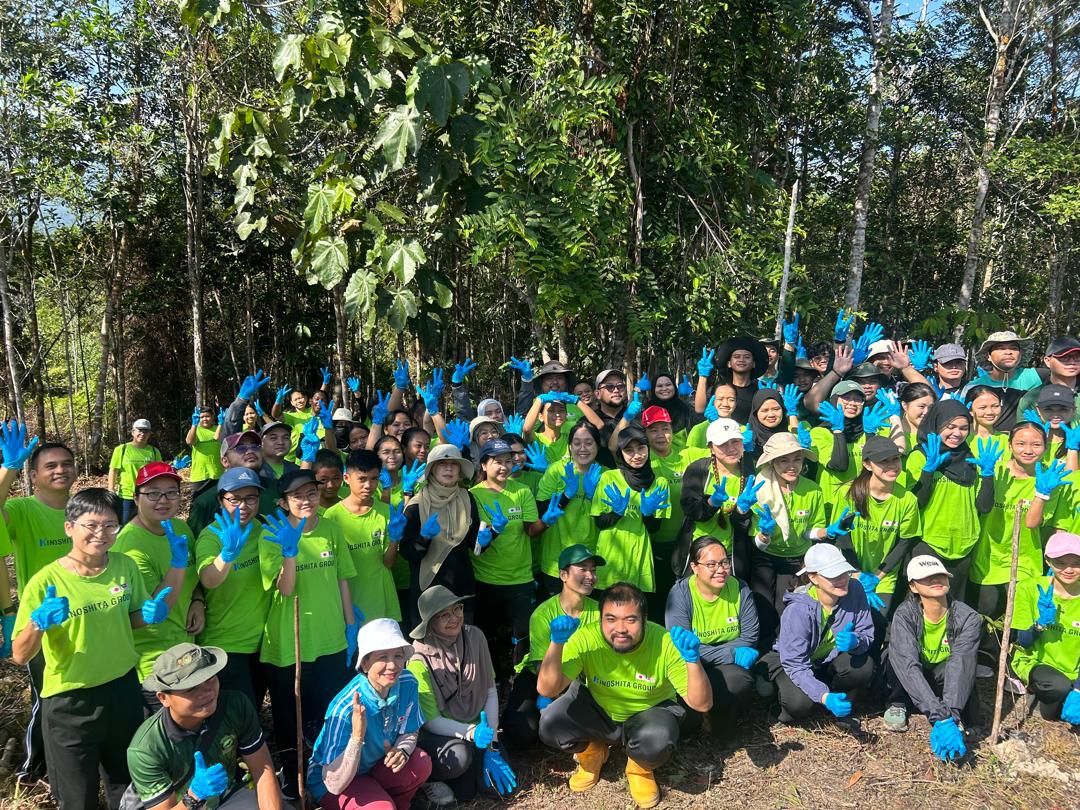
All participants gather after the tree-planting work
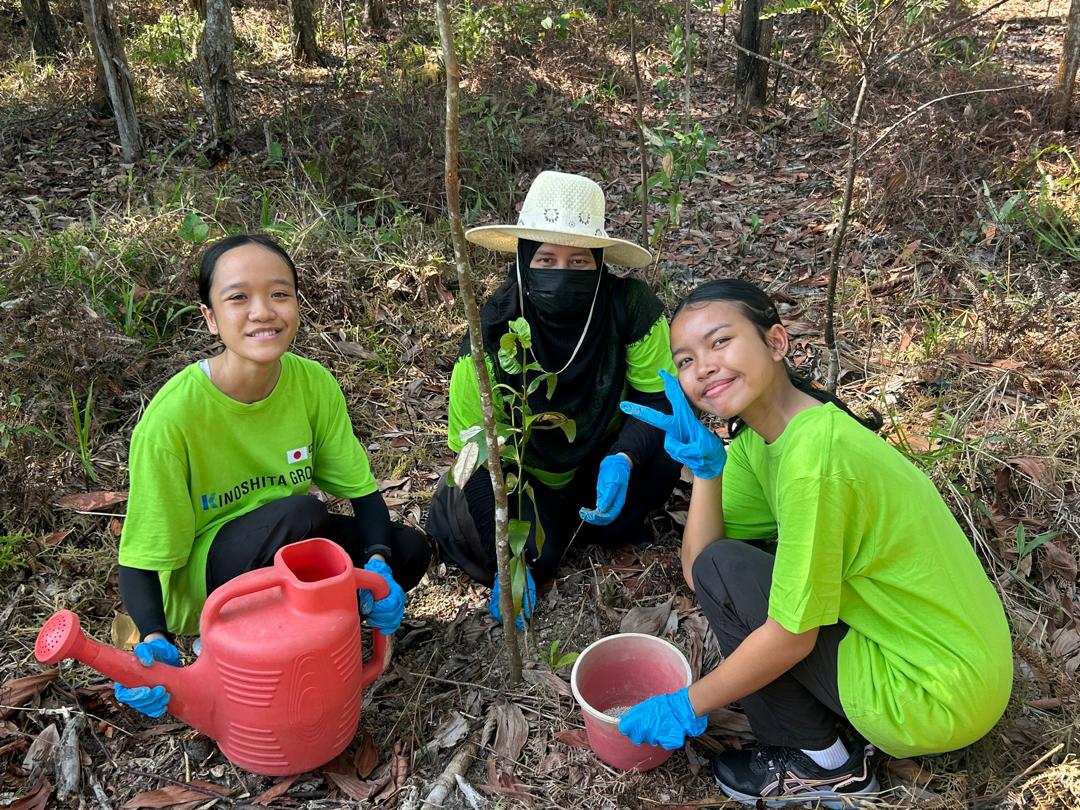
Together, the group planted 700 trees
On Saturday, June 28, thirty-five students and teachers from Krait Primary School participated alongside state government officials in a tree-planting session and environmental education program.
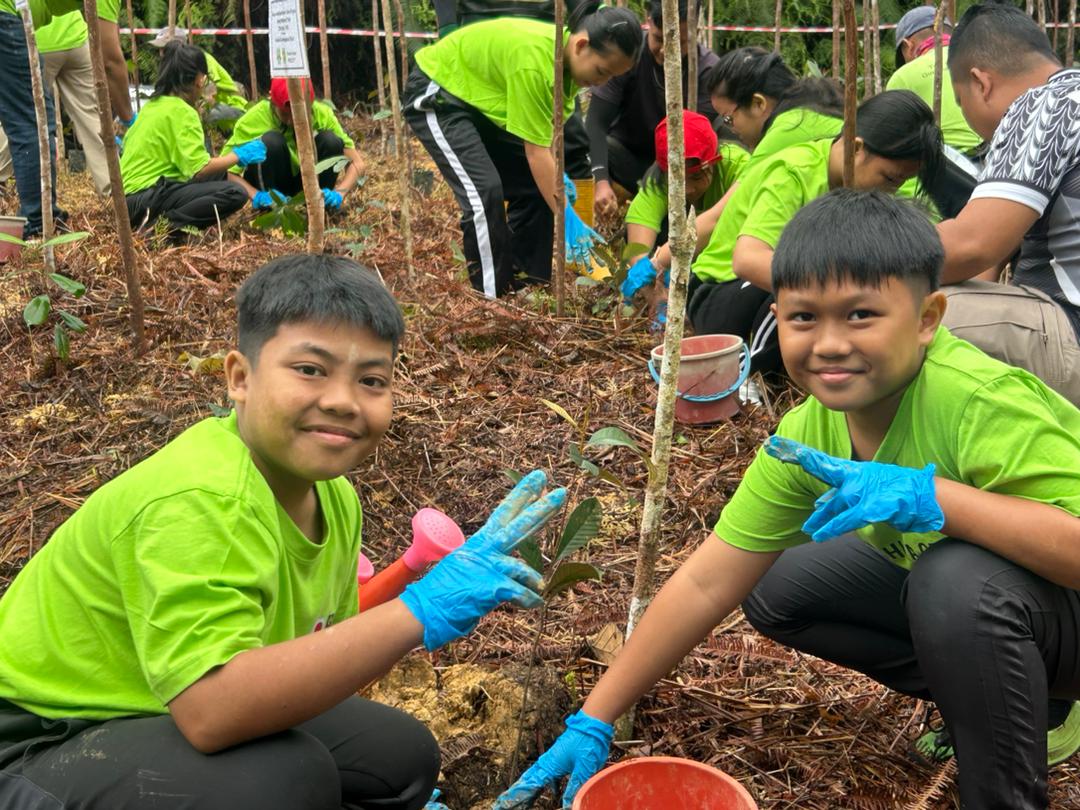
Together, the group planted 300 trees
● Activities at Universiti Malaysia Sarawak (UNIMAS)
With support from Takasago Thermal Engineering Co., Ltd., JMA conducts the “Takasago Forest” Tropical Rainforest Restoration Program at UNIMAS. From April through July, 500 new seedlings were sown, maintenance work was carried out on existing planted trees (weeding, fertilizing, and infilling), and students from the Faculty of Resource Science and Technology conducted surveys and field practicums.
Recording the growth of previously planted trees
The research examines the relationship between tree growth and soil conditions at previously planted sites, with the data collected to be applied to future planting and maintenance work.
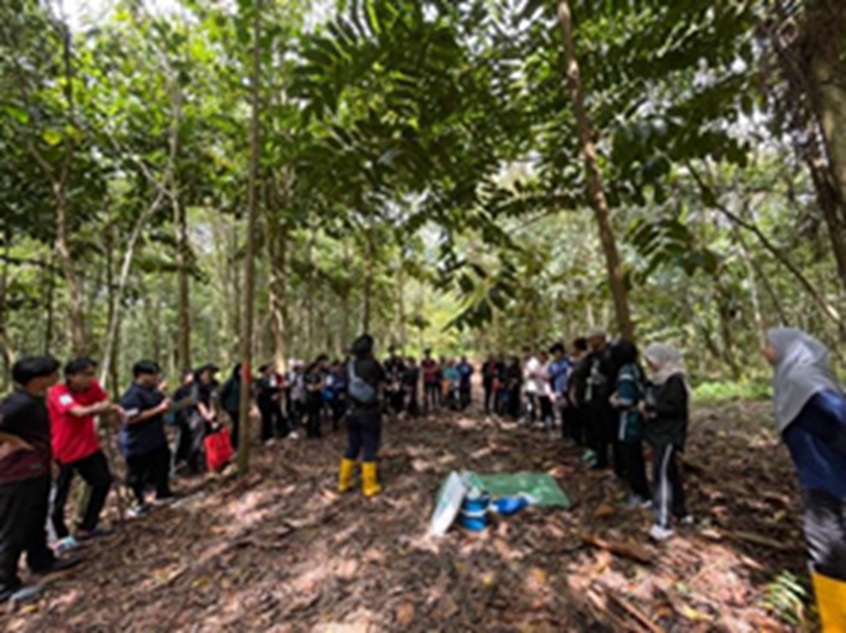
Measuring soil changes at planted sites
This fiscal year, 1,000 trees are planned for planting, and a tree-planting event involving university students, local primary school children, and other participants is scheduled for the latter half of November.
Activities on the Malay Peninsula
● Mangrove Forest Restoration Project
In the Merbok Forest Reserve in Kedah State and the Sungai Acheh Forest Reserve in Penang State on the Malay Peninsula, JMA is implementing the “Kinoshita Forest Mangrove Restoration Project” (supported by Kinoshita Group) and the “Yuasa Trading Forest” project (supported by Yuasa Trading Co., Ltd.), in collaboration with state government agencies, Universiti Sains Malaysia (USM), and local village communities.
On Sunday, April 20, forty participants — including corporate volunteers from Penang State, community groups, and USM faculty members — gathered at the Sungai Acheh Forest Reserve for a planting program and a cooking class using mangrove fruits and leaves.
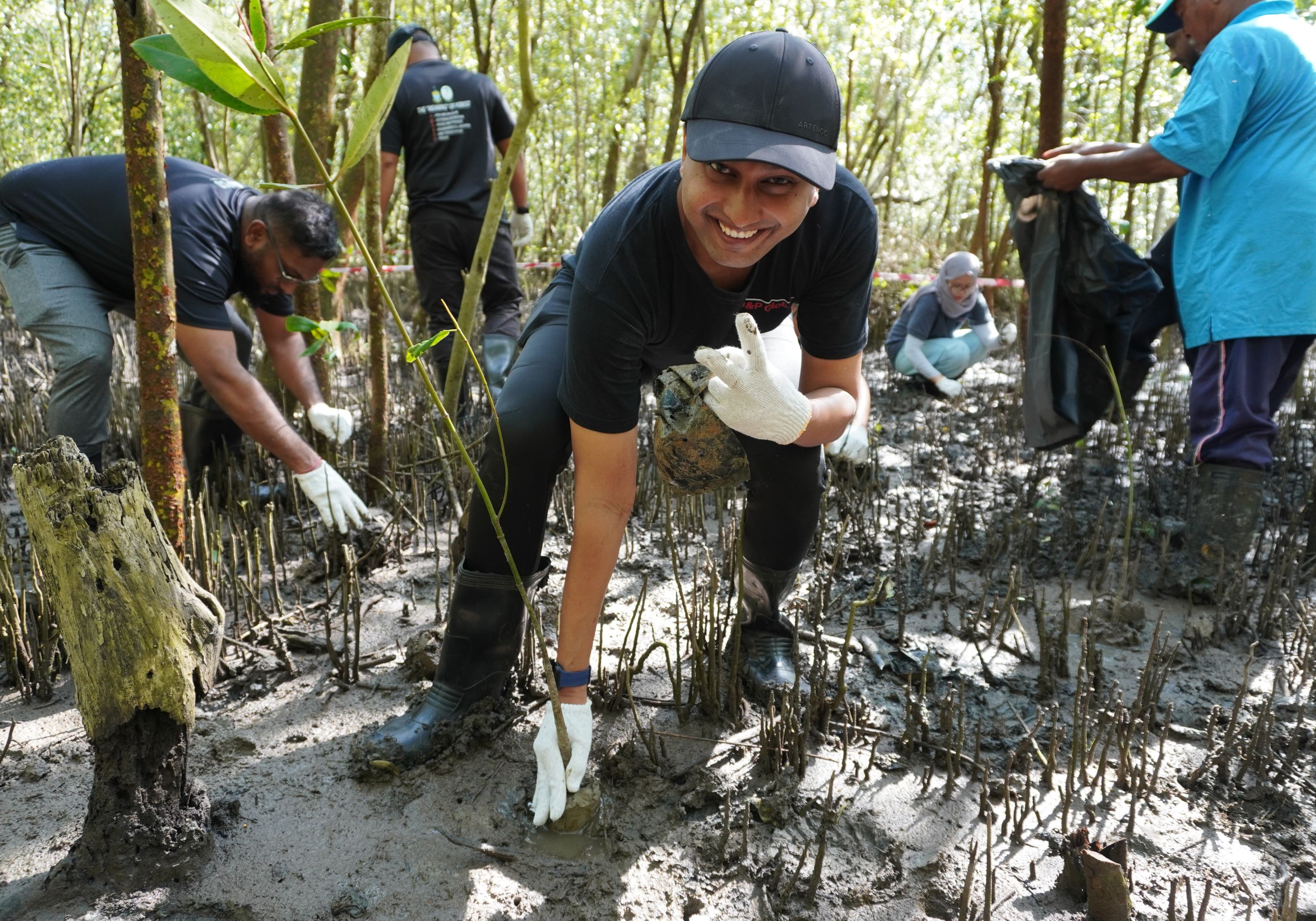
Planting seedlings in a degraded area
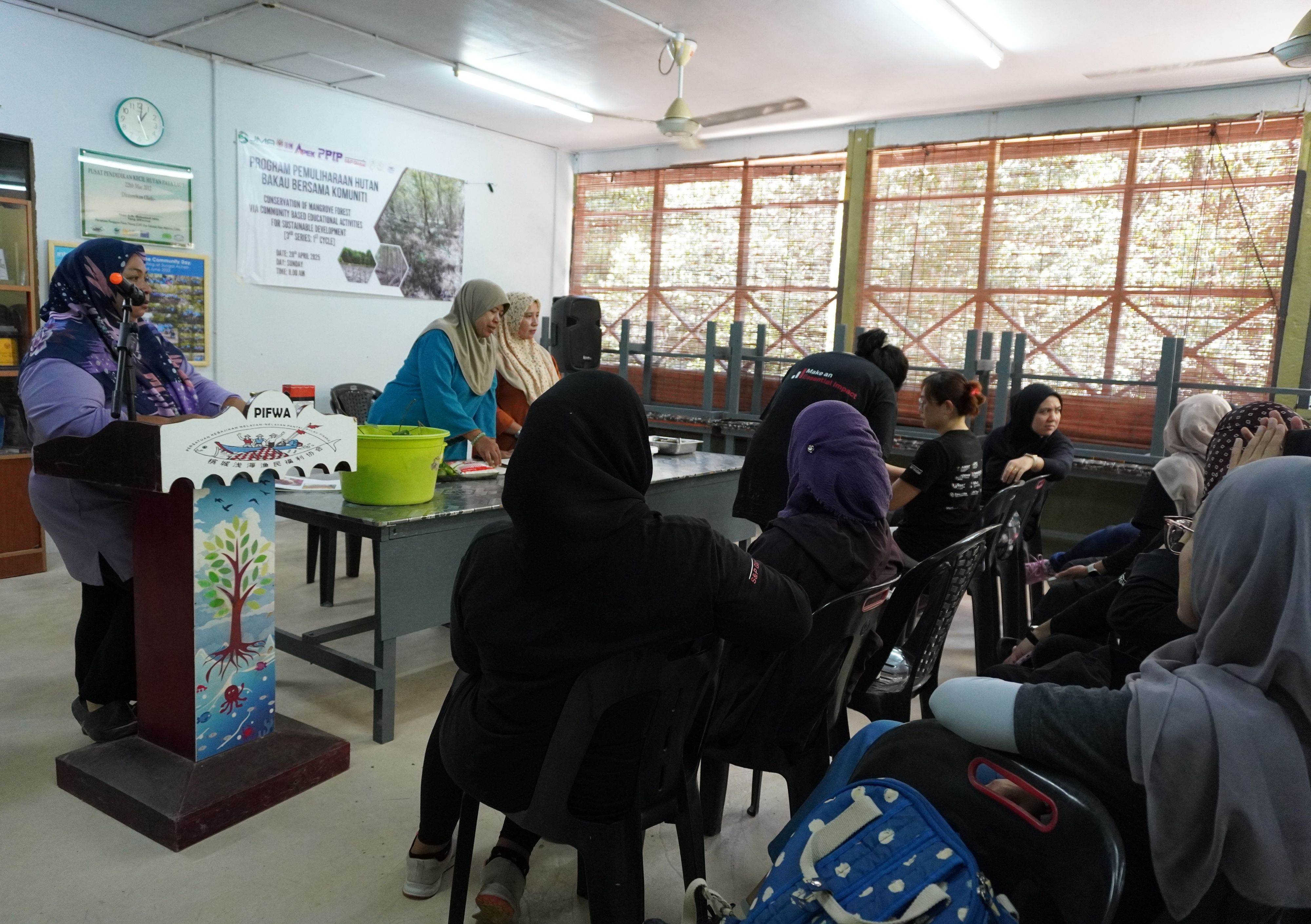
Village women host a cooking class
After planting 300 trees together, participants joined a program to deepen their understanding of traditional knowledge about mangroves and build awareness of conservation. Under the guidance of local villagers, everyone cooked and shared a meal prepared from mangrove ingredients. On Monday, May 5, forty participants — including students and teachers from the MARA Polytechnic in Kedah State and local community groups — gathered at the Merbok Forest Reserve and planted 300 trees.
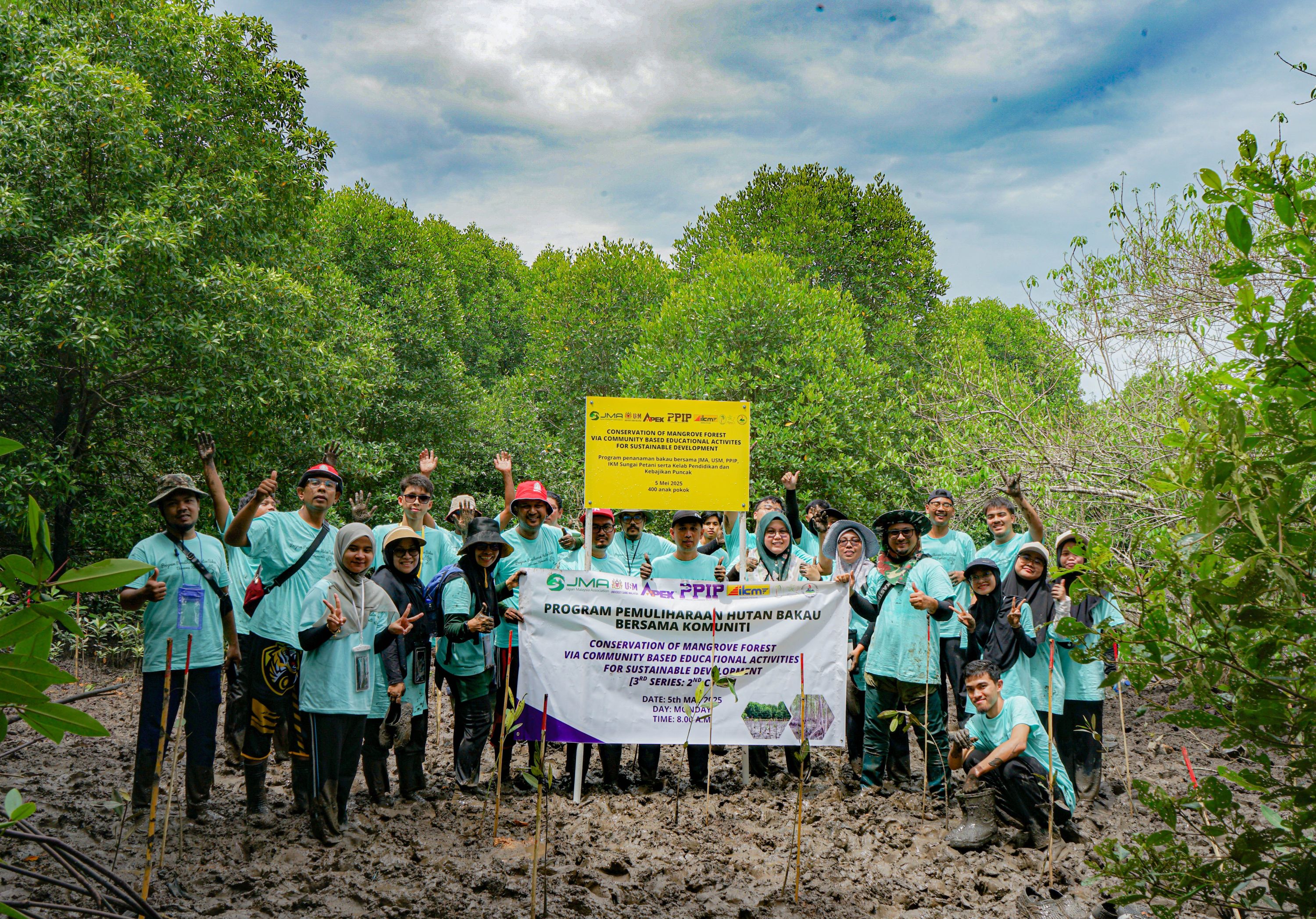
MARA Polytechnic students join the planting activities
It was the school’s first time participating in the project. Despite struggling with the muddy conditions, the students threw themselves into the work with enthusiasm.
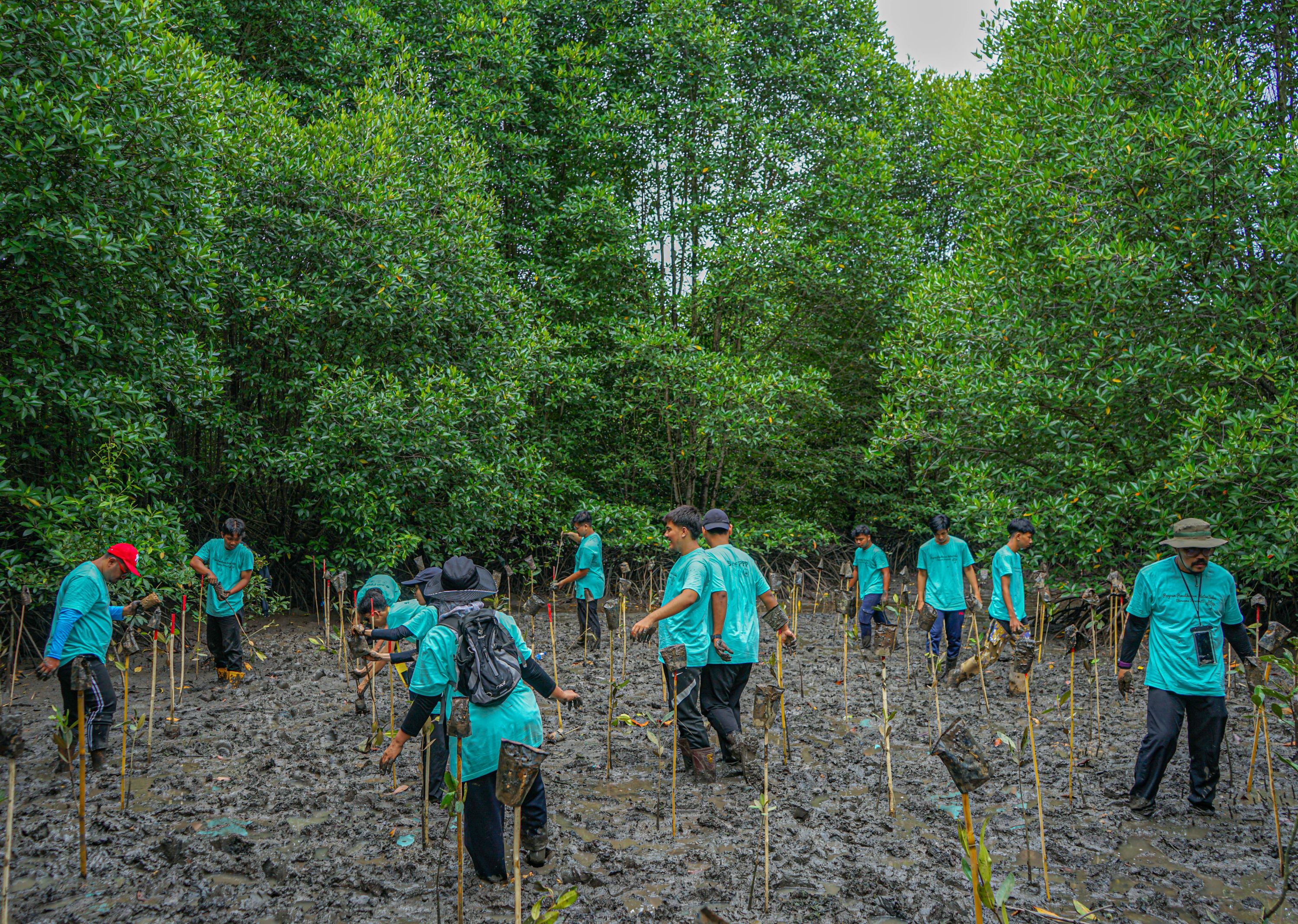
Planting in the muddy terrain
On Monday, June 16, forty participants — including students and teachers from Universiti Utara Malaysia (UUM) and local community groups — gathered at the Merbok Forest Reserve and planted 500 trees.
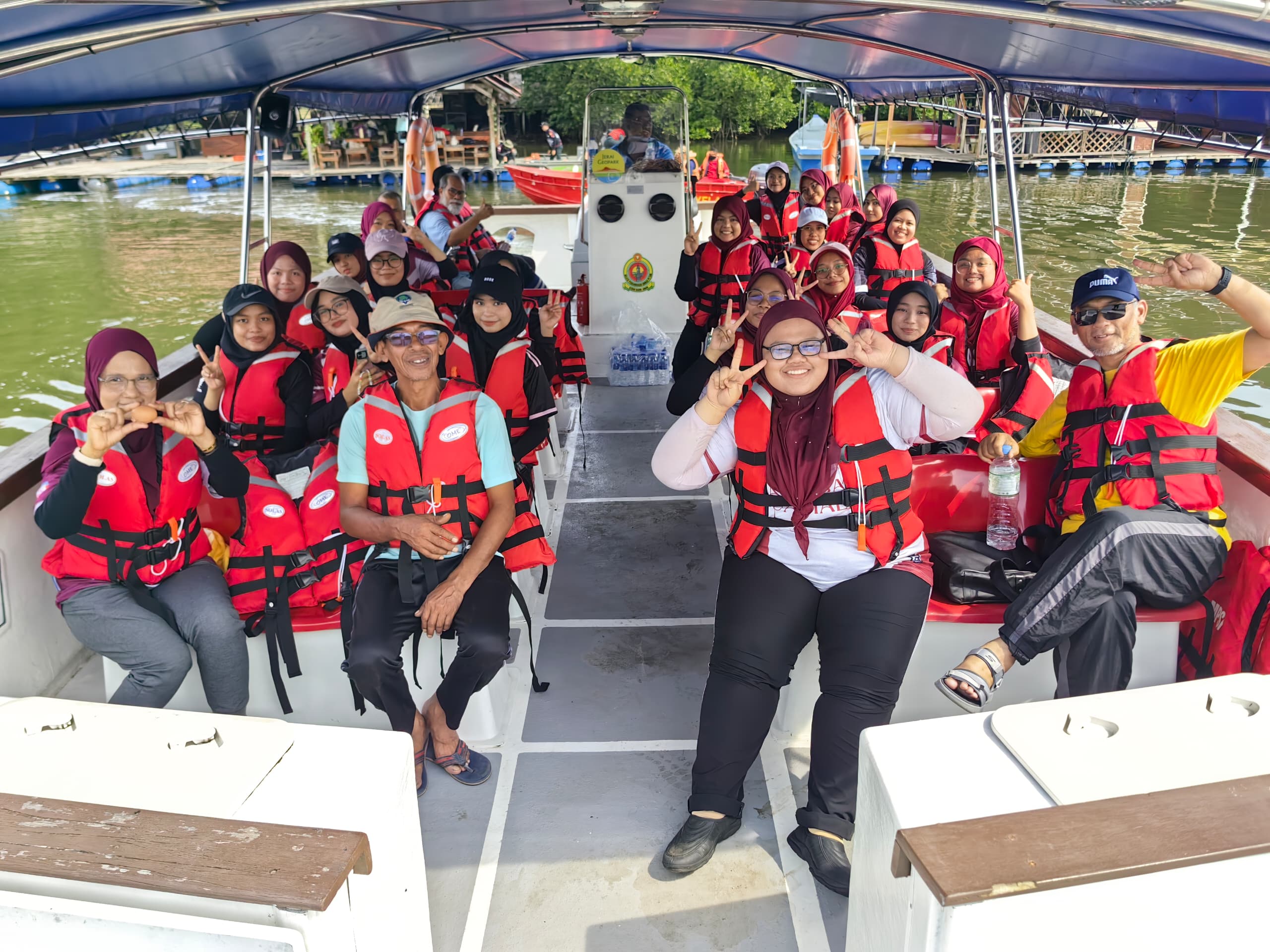
Heading to the planting site by boat
UUM is the only national university in Kedah State, and this was the first time it had taken part in the project.
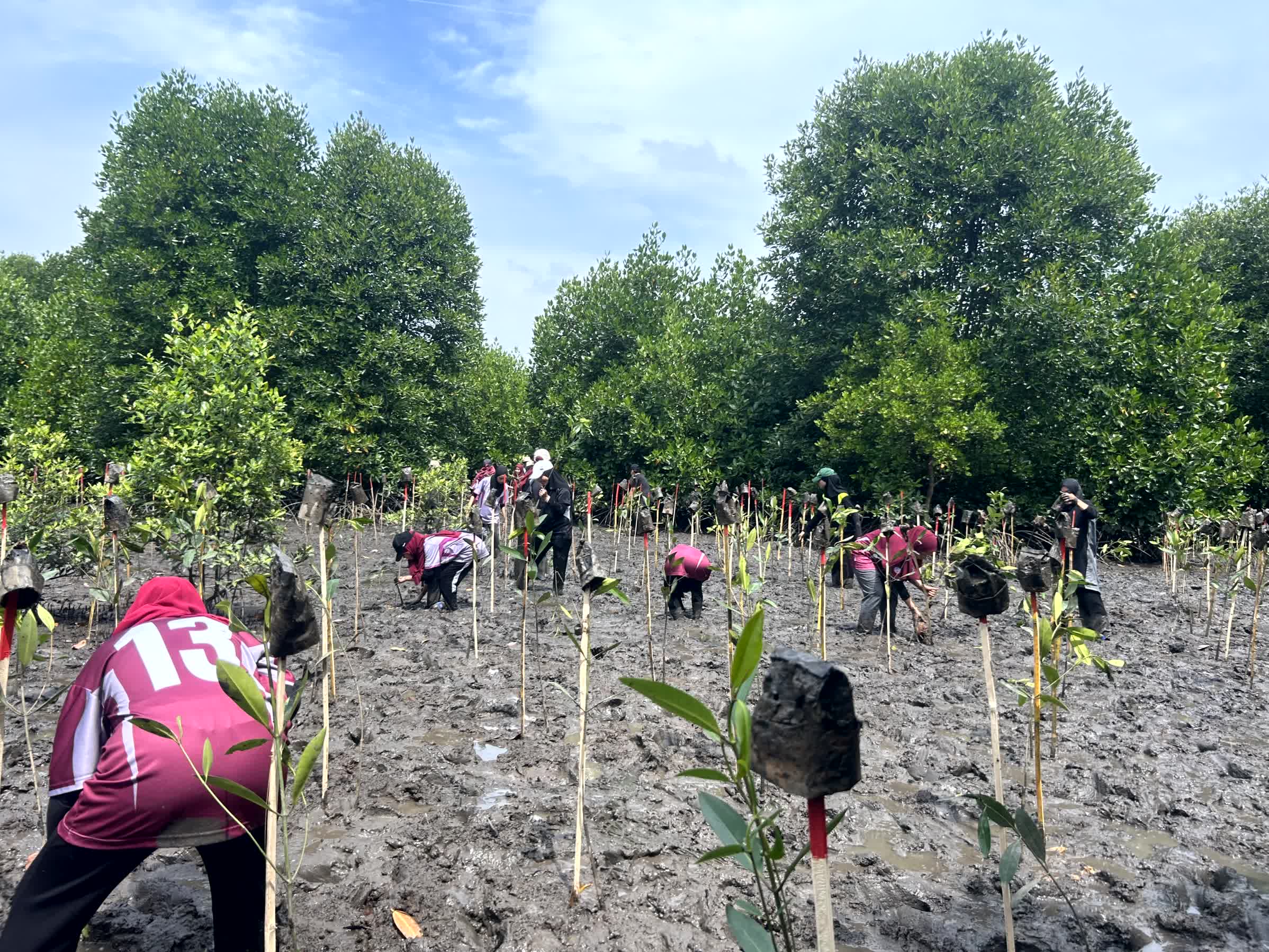
Planting to restore vegetation
In the second half of this fiscal year, planting activities will continue with the involvement of diverse organizations through the network of USM’s Faculty of Education. JMA will also work with partner organizations and village groups to carry out community support programs and other related activities.