
The 2025 World Exposition Osaka and Malaysia Fair 2025
The original of this article was written in Japanese and can be found here.
The 2025 World Exposition Osaka — officially decided in November 2018 at the Bureau International des Expositions (BIE) — is currently running at Yumeshima Island in Osaka Prefecture from Sunday, April 13 to Monday, October 13, 2025. Separately, Malaysia Fair 2025 Osaka was held from Friday, June 27 to Sunday, June 29, 2025, at LaLaport EXPOCITY in Suita, Osaka Prefecture.
In February 2025, Mr. Kunihiko Sato — a former Japan International Cooperation Agency (JICA) country representative to Malaysia and former Director of the JICA Kansai Center, among other senior JICA postings — joined the Japan Malaysia Association (JMA) as an advisor. He currently serves as a professor at Kansai University of International Studies in Hyogo Prefecture. Against that backdrop, JMA Deputy Director Yuma Kosuga traveled to the Kansai region from June 26 to 29, 2025, visiting Expo 2025 Osaka, Malaysia Fair 2025 Osaka, and Kansai University of International Studies to meet with Advisor Sato. The following is his report on the trip.
Introduction
I’m Kosuga from the Japan Malaysia Association. This trip took me to the Kansai region for Expo 2025 Osaka and a number of Malaysia-related events, as well as visits with JMA colleagues and advisors. At Expo 2025 Osaka, I focused primarily on the Malaysia Pavilion and also toured pavilions from Southeast Asian countries and Islamic nations. When I mentioned my Expo plans to our advisor, Prof. Sato, he kindly invited me to visit him at Kansai University of International Studies, where he is now a professor. The visit gave me a tour of the campus, an introduction to the university’s activities, and a valuable opportunity to discuss JMA’s latest projects. I also attended Malaysia Fair 2025 Osaka, where JMA Executive Director Arai was performing in the traditional dance program, and I was glad to be there for the show.
It was genuinely exciting to attend two of the biggest Malaysia-related events currently happening in Japan — the Malaysia Pavilion at an Expo Japan is championing with considerable effort, and Malaysia Fair 2025 Osaka, which the Embassy of Malaysia in Japan helped organize for its first-ever Osaka edition. Meeting Advisor Sato — whose career encompassed not only the JICA Malaysia Office but also the JICA Kansai Center — at Kansai University of International Studies for an update on activities and an exchange of information was equally rewarding.
There was also a delightful bonus: students from the Kansai area who had participated in the “Orangutan Forest Restoration Project” — a program JMA runs in partnership with the Nippon Foundation Volunteer Center — gathered to meet me while I was in Osaka. Students from different cohorts of the project have been building friendships that reach across their original groups, and the fact that they cleared time in their schedules to come and see me was really heartwarming. Below, I describe each part of the visit in turn.
Visiting Expo 2025 Osaka
Expo 2025 Osaka, organized under the theme “Designing Future Society for Our Lives,” is centered on the Japan Association for the 2025 World Exposition. I traveled from Tokyo to Osaka on the morning of Thursday, June 26, 2025, and went straight to the Expo site. It was a rainy Thursday, and perhaps for that reason the queues were short. Entering through the East Gate and passing under the Grand Ring, I found the Malaysia Pavilion immediately in front of me. The pavilion was designed by Kengo Kuma & Associates, with a concept called “Interwoven.” The design expresses Malaysia’s multiethnic, multicultural, and multi-religious character through bamboo — a natural material deeply rooted in both Malaysian and Japanese culture.
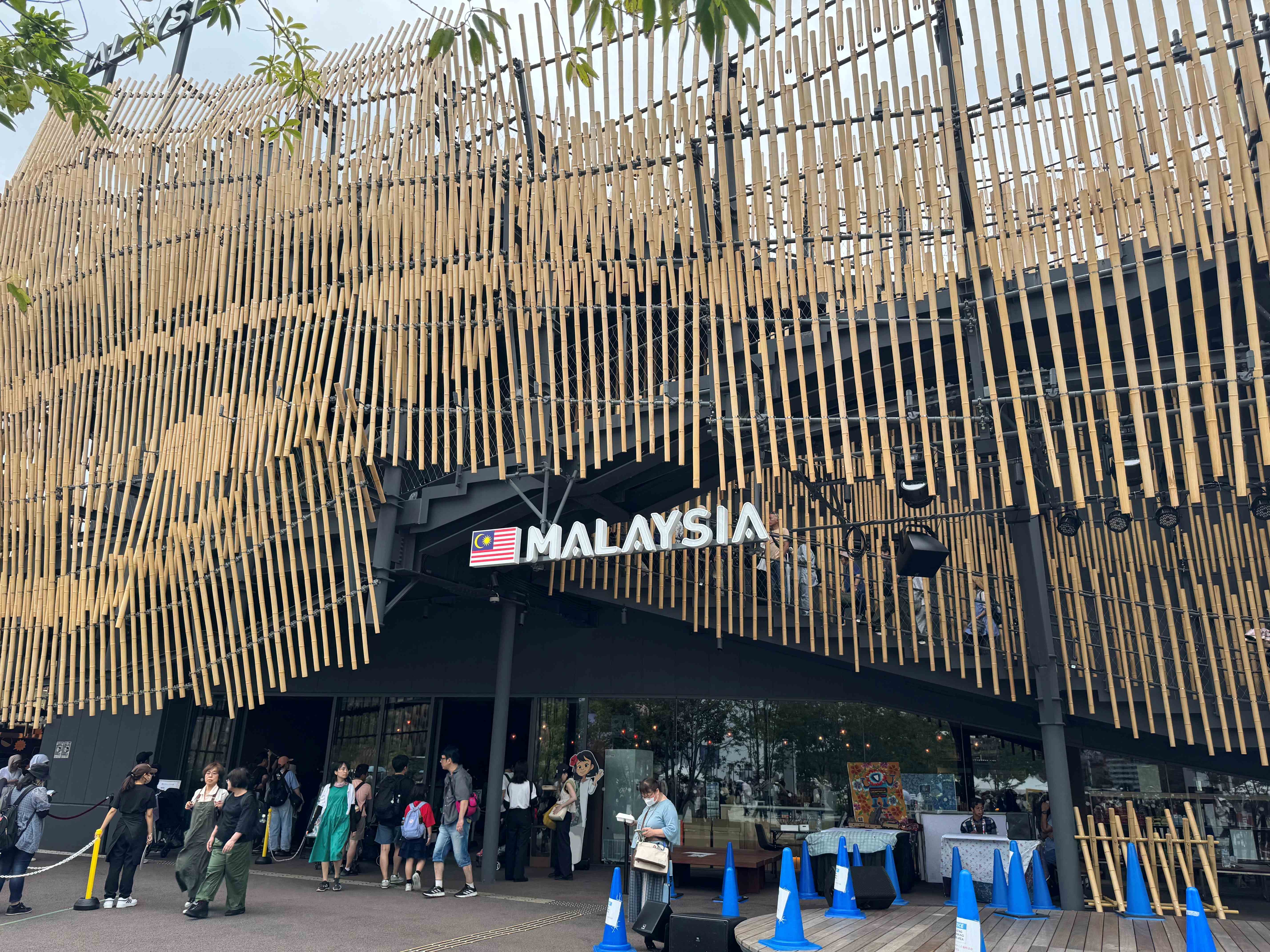
The exterior of the Malaysia Pavilion
Under the overarching theme “Weaving a Future in Harmony,” the pavilion’s exhibition begins on the second floor and descends naturally to the first, where food and souvenir sales are located — so visitors absorb the Malaysia story before finding themselves among the shops. A large board at the second-floor entrance lays out the exhibition’s six sections: ① Cultural Hall, ② Passage of Progress, ③ Progress Hall, ④ Tree of Harmony, ⑤ Sustainability Hall, and ⑥ Hall of Fame. Each section aims to showcase Malaysia’s diverse culture and vibrant economy, presenting a vision of a sustainable future where technology, nature, and people coexist in balance.
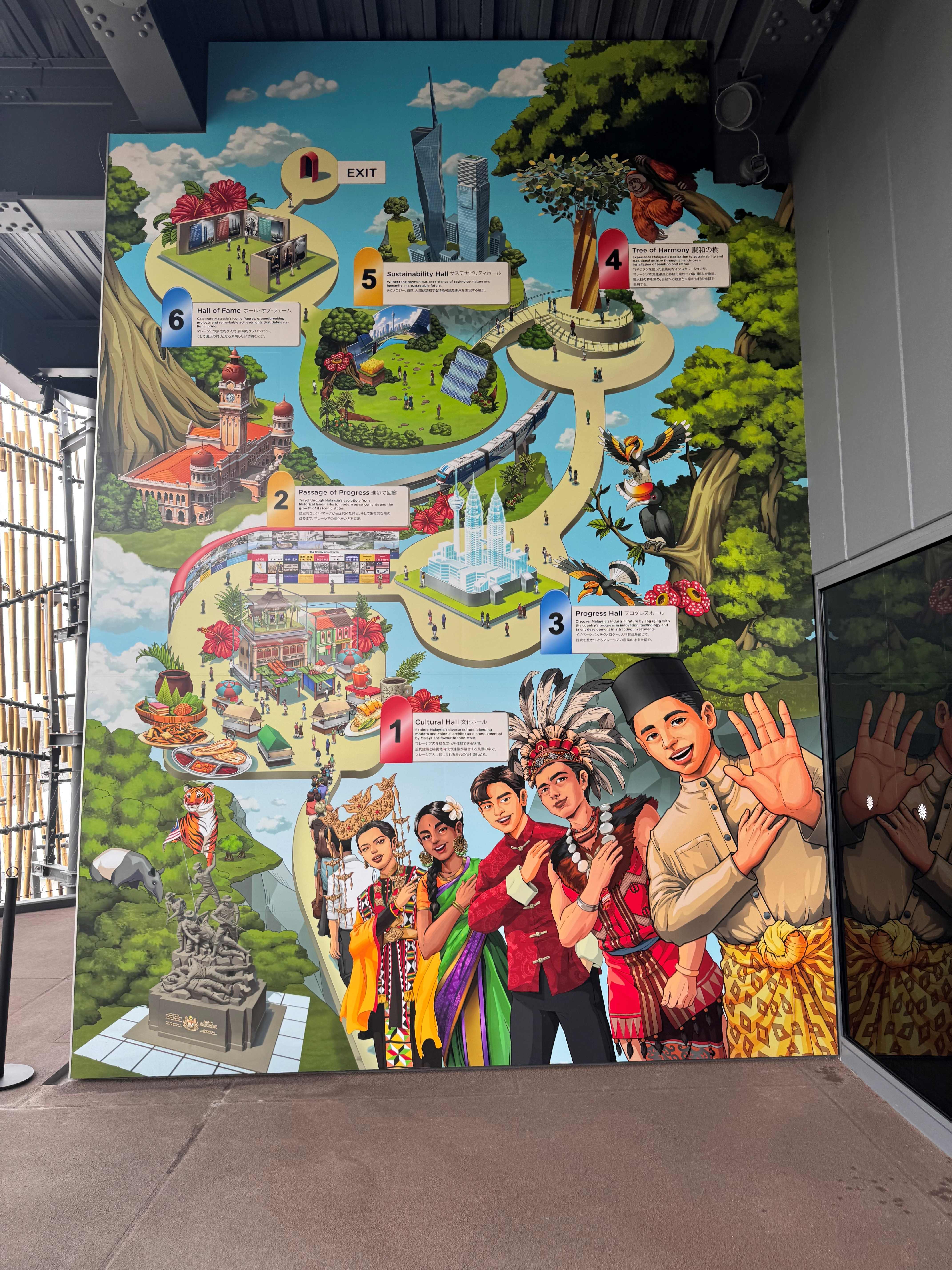
The information board at the second-floor entrance
The undisputed showstopper of the pavilion is the “Tree of Harmony,” created by internationally acclaimed Malaysian artist Red Hong Yi. Its leaves, designed in a rich variety of colors, celebrate the extraordinary diversity of Malaysia through structure and form.
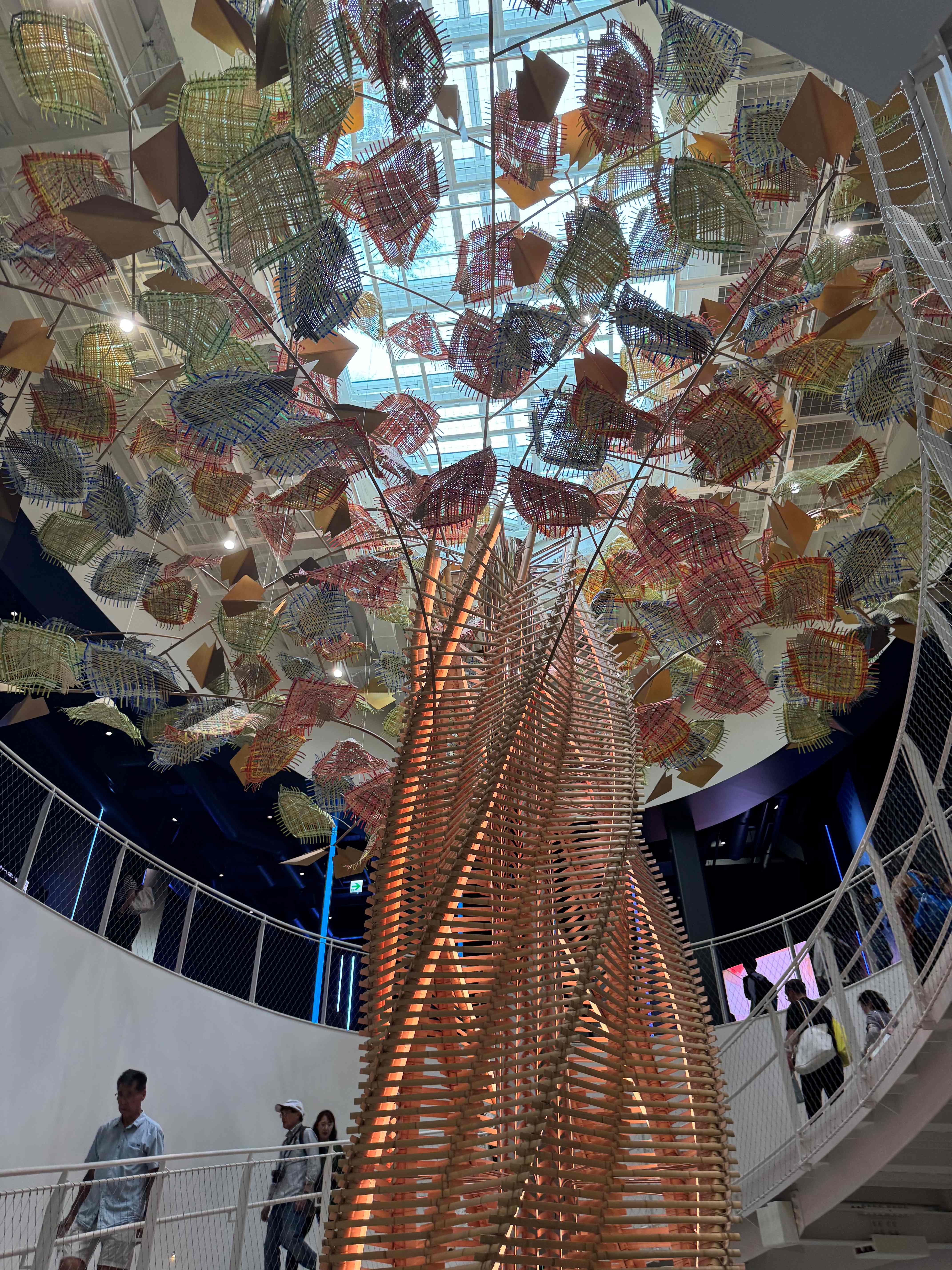
The Tree of Harmony
On the first floor, I picked up Nasi Lemak — Malaysia’s beloved national dish — and Teh Tarik to go. Many pavilions offer this kind of hands-on culinary experience, and it’s one of the things that makes a World Expo so compelling. Eating food you normally enjoy in Malaysia here in Japan produces a curious, slightly nostalgic feeling.

Nasi Lemak and Teh Tarik under the Grand Ring
Visiting Advisor Kunihiko Sato
The morning after the Expo, Friday, June 27, I checked out of my hotel in Umeda, Osaka, and headed to Kansai University of International Studies to see JMA Advisor Kunihiko Sato. Drawing on his extensive practical experience at JICA and beyond, Prof. Sato is currently a professor at the university, and he graciously invited me to his office for the visit.
We started with a conversation about the Expo the day before, and Prof. Sato then gave me advice on JMA’s latest activities and future plans. He also showed me around the campus and introduced me to staff from the international affairs office as well as a vice president who oversees global engagement and has connections to Malaysia. That evening we moved into Osaka for dinner — a relaxed occasion where we talked freely about everything from Prof. Sato’s student days onward. His hospitality went well beyond the day itself: he had even sent me suggestions in advance about how to spend free time in Osaka and Hyogo. I am genuinely grateful for the generosity he showed from start to finish.
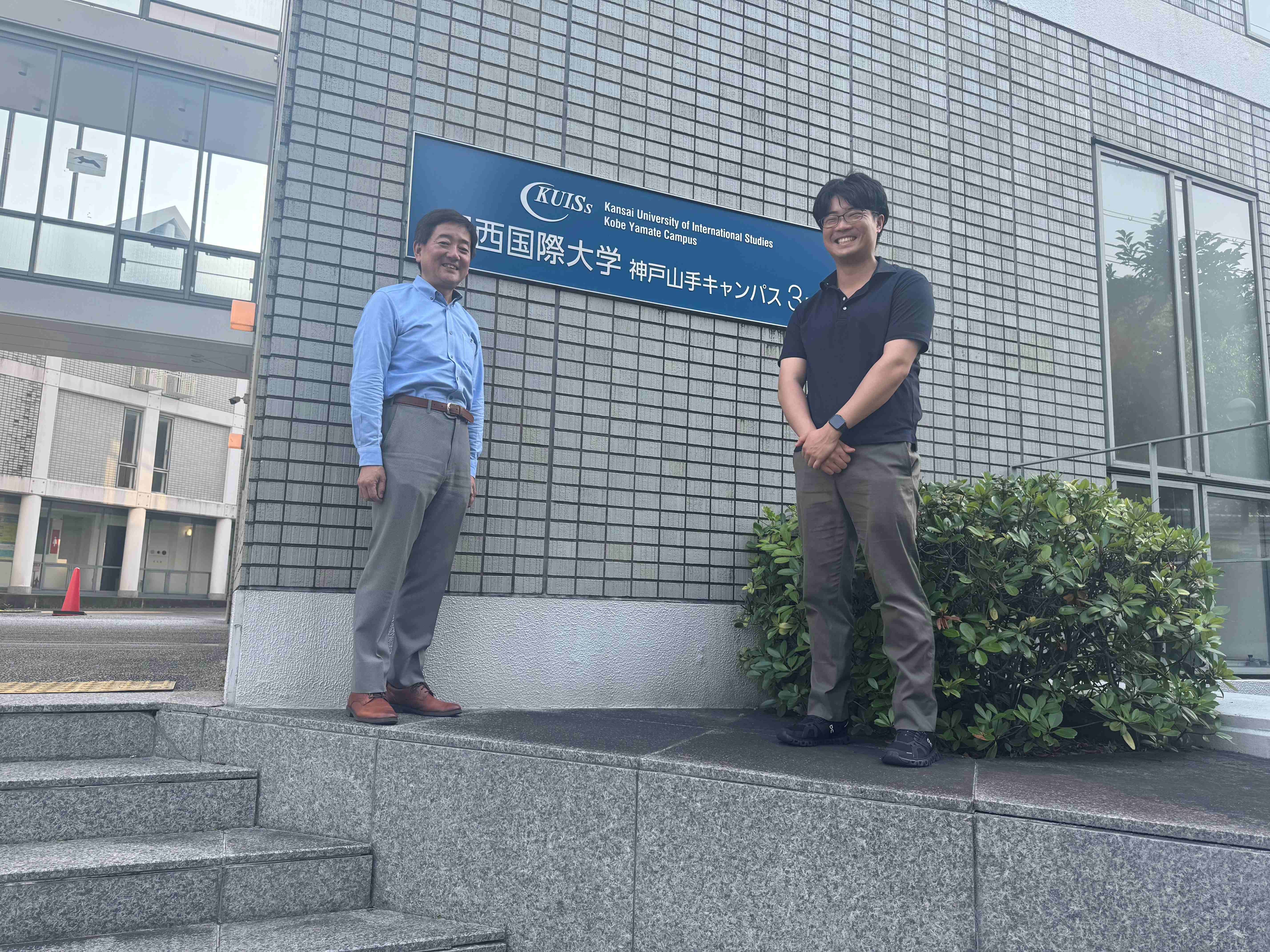
With Advisor Sato (left) in front of Kansai University of International Studies
A Mini Reunion with the Students
Since 2024, JMA has been running the “Orangutan Forest Restoration Project” in partnership with the Nippon Foundation Volunteer Center, sending university students from across Japan to Sarawak, Malaysia, to take part in rainforest reforestation efforts. As of the writing of this report, seven cohorts have completed the program, with approximately ninety students having participated. The students are selected from universities nationwide, and an alumni network is gradually taking shape — particularly in Tokyo, where cross-cohort connections have been forming.
When Kansai-based participants heard I would be in Osaka, they arranged to gather in Umeda on Saturday, June 28. Students from the 1st, 3rd, and 5th cohorts came along. I was touched to learn that one 3rd-cohort student had joined the project after hearing about it from a 1st-cohort participant at a separate volunteer event — a wonderful reminder of how these connections ripple out in unexpected ways.

With the students in Umeda
Students in Tokyo have also invited me when they get together, and apparently a reunion in Tohoku is already being planned — they’ve already reached out to include me (laughs). Students who have experienced rainforest restoration firsthand in Sarawak, fallen in love with Malaysia, and then go out into the world carrying that affection with them — that matters, both for Japan and for Malaysia.
Malaysia Fair 2025 Osaka
Malaysia Fair is an annual event, first held in 2019, that showcases the appeal of Malaysia — normally in Tokyo, with the Embassy of Malaysia in Japan at its core and the support of Malaysian government agencies and private companies. This edition was the event’s Osaka debut, running from Friday, June 27 to Sunday, June 29, 2025, at LaLaport EXPOCITY in Suita, Osaka Prefecture.
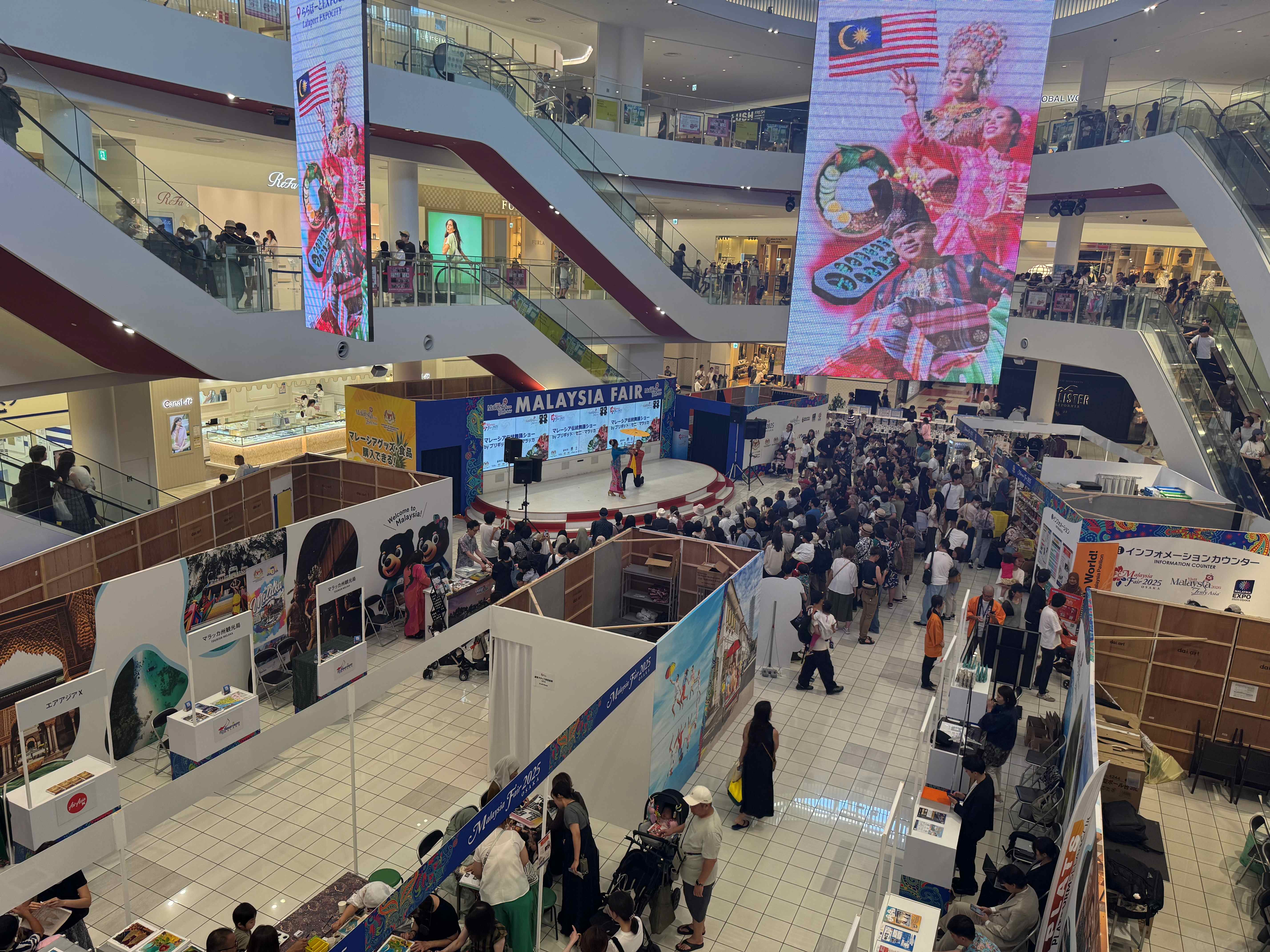
Malaysia Fair 2025 Osaka
On Sunday, June 29 — the final day of the fair — I checked out of my Umeda hotel and attended the afternoon session, where I watched JMA Executive Director Arai perform in the “Malaysian Traditional Dance Show by Mukarr Budaya.” The roughly fifteen-minute performance was both elegant and powerful, and I was very glad to have made it there.
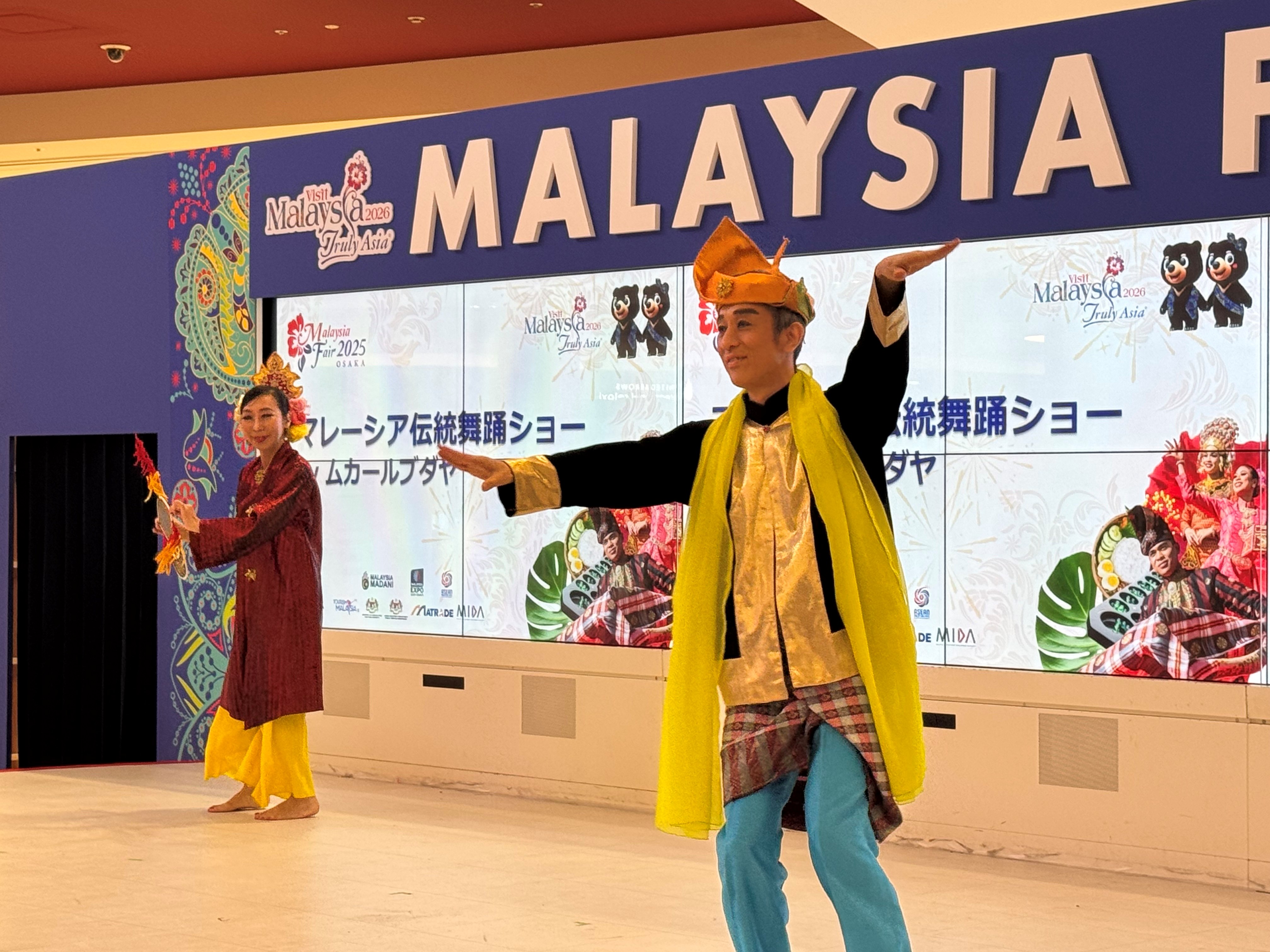
Executive Director Arai performing in the traditional dance show
The stage featured a full lineup of performances and events beyond the dance show, and Executive Director Arai was kept busy throughout — but I managed to get a photo with her in traditional costume between the action.
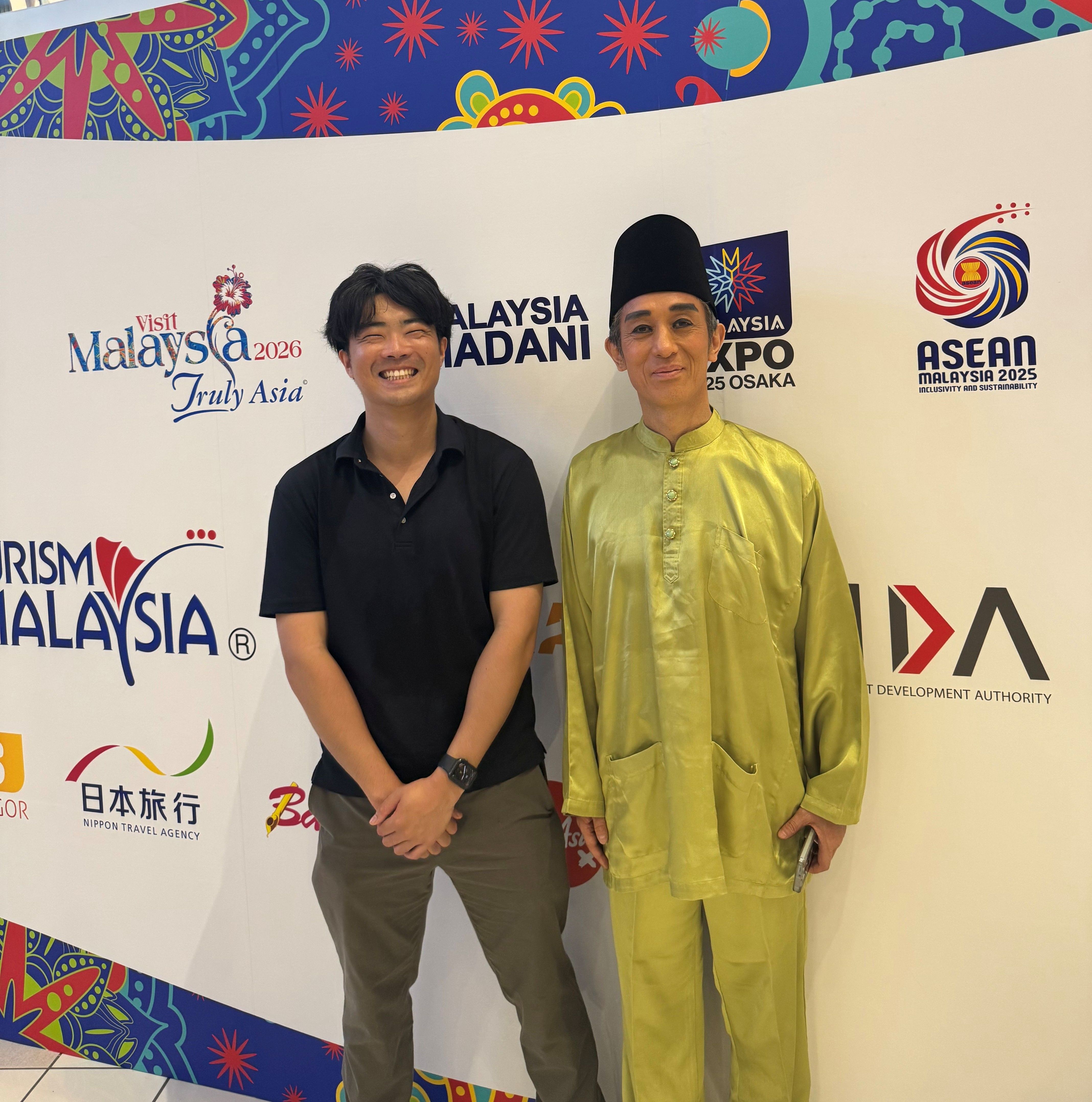
With Executive Director Arai (right)
The venue also featured Halal2Go, a stall offering a selection of halal-certified Asian foods, and food trucks serving authentic Malaysian cuisine were parked outside.

Food trucks outside the venue

Products at the Halal2Go stall
Closing Thoughts
It was a short visit, but it gave me the chance to attend events in the Kansai region centered on Expo 2025 Osaka and to strengthen ties with people connected to JMA. I want to keep making the most of opportunities like these, one by one.